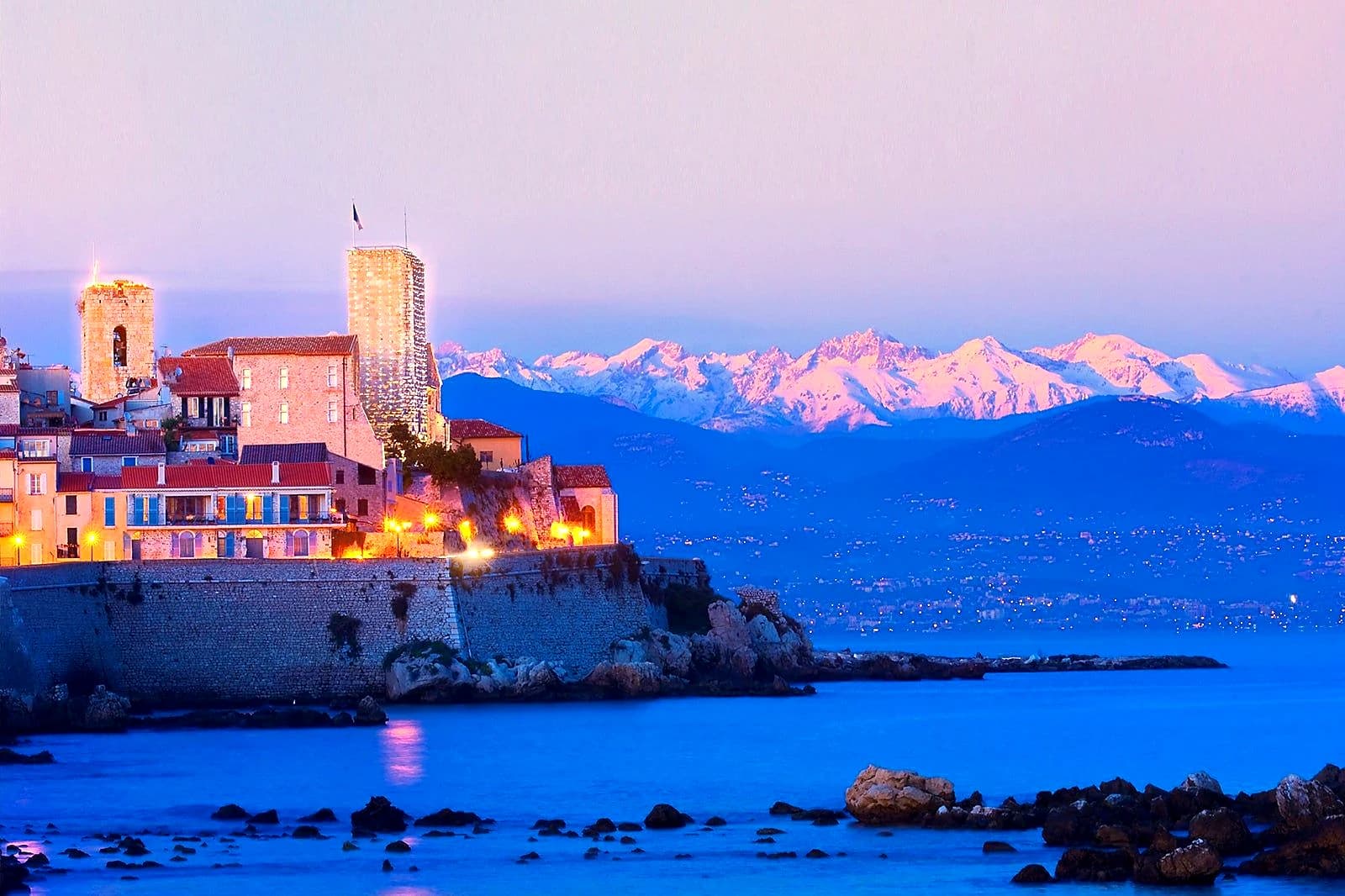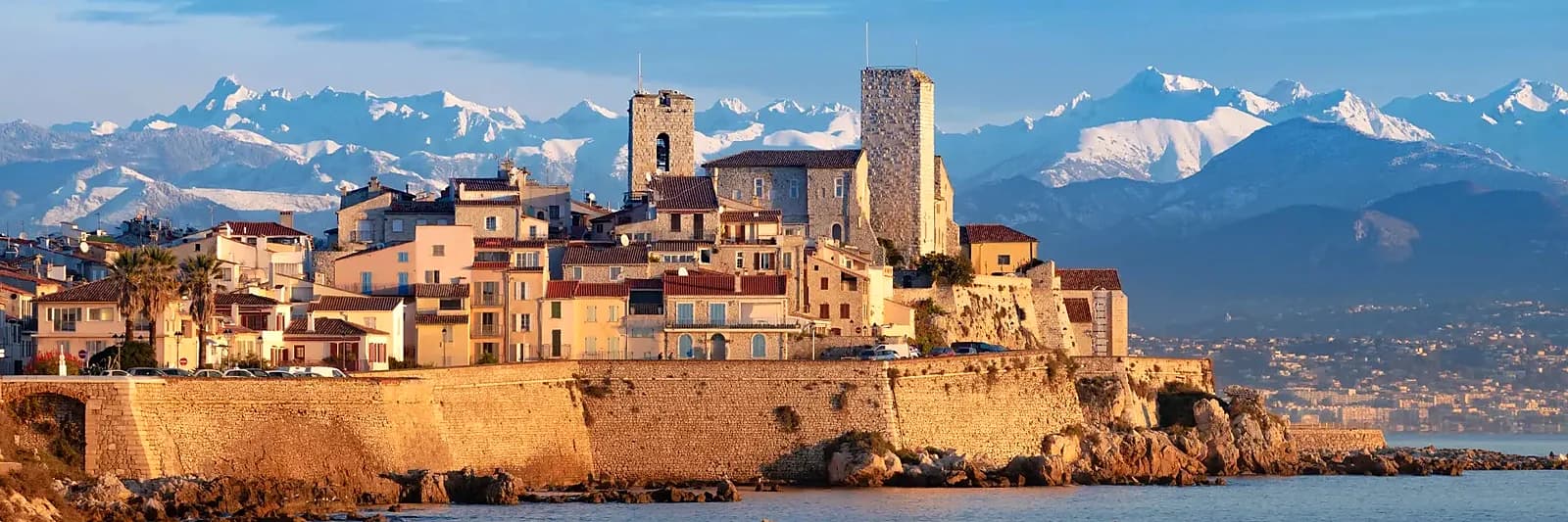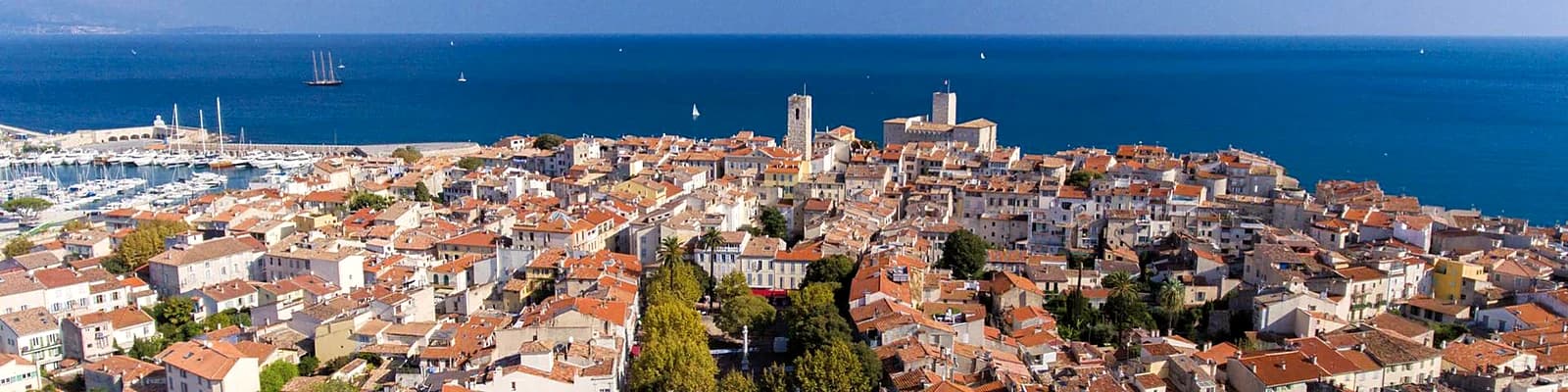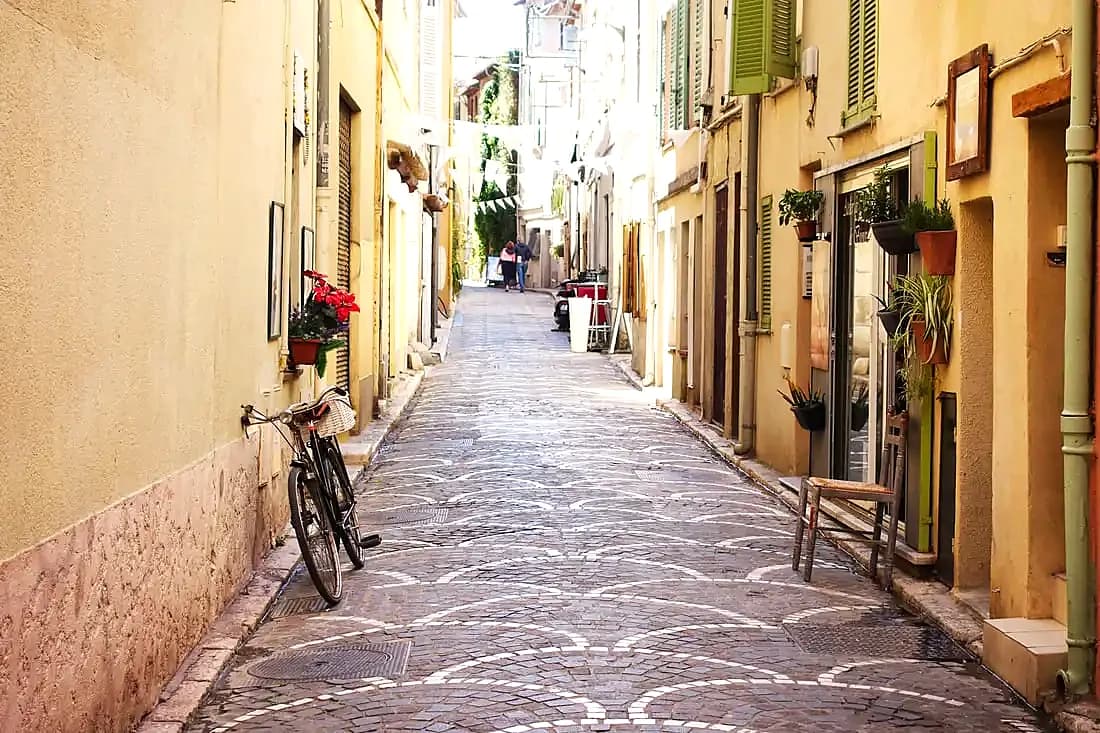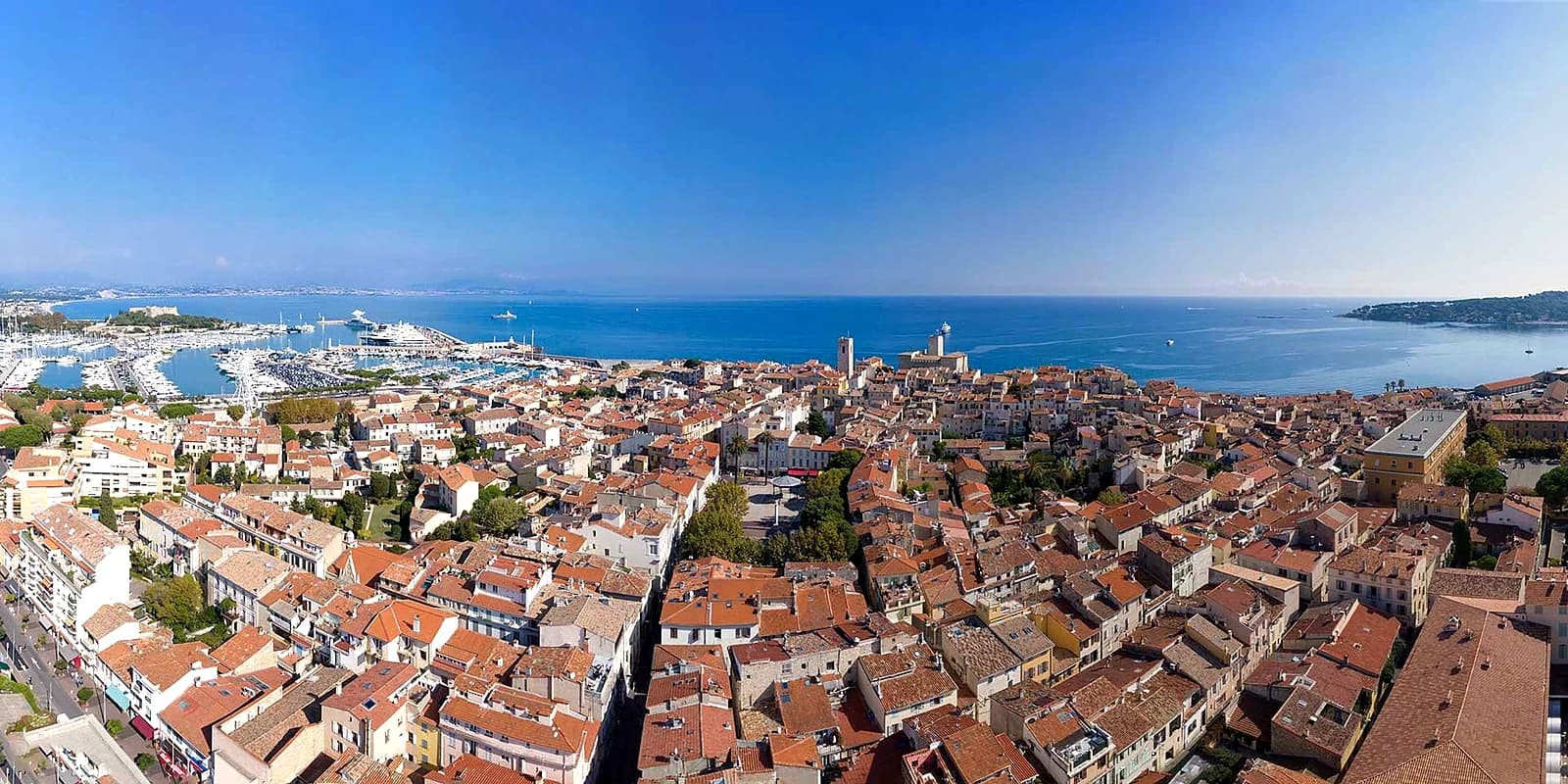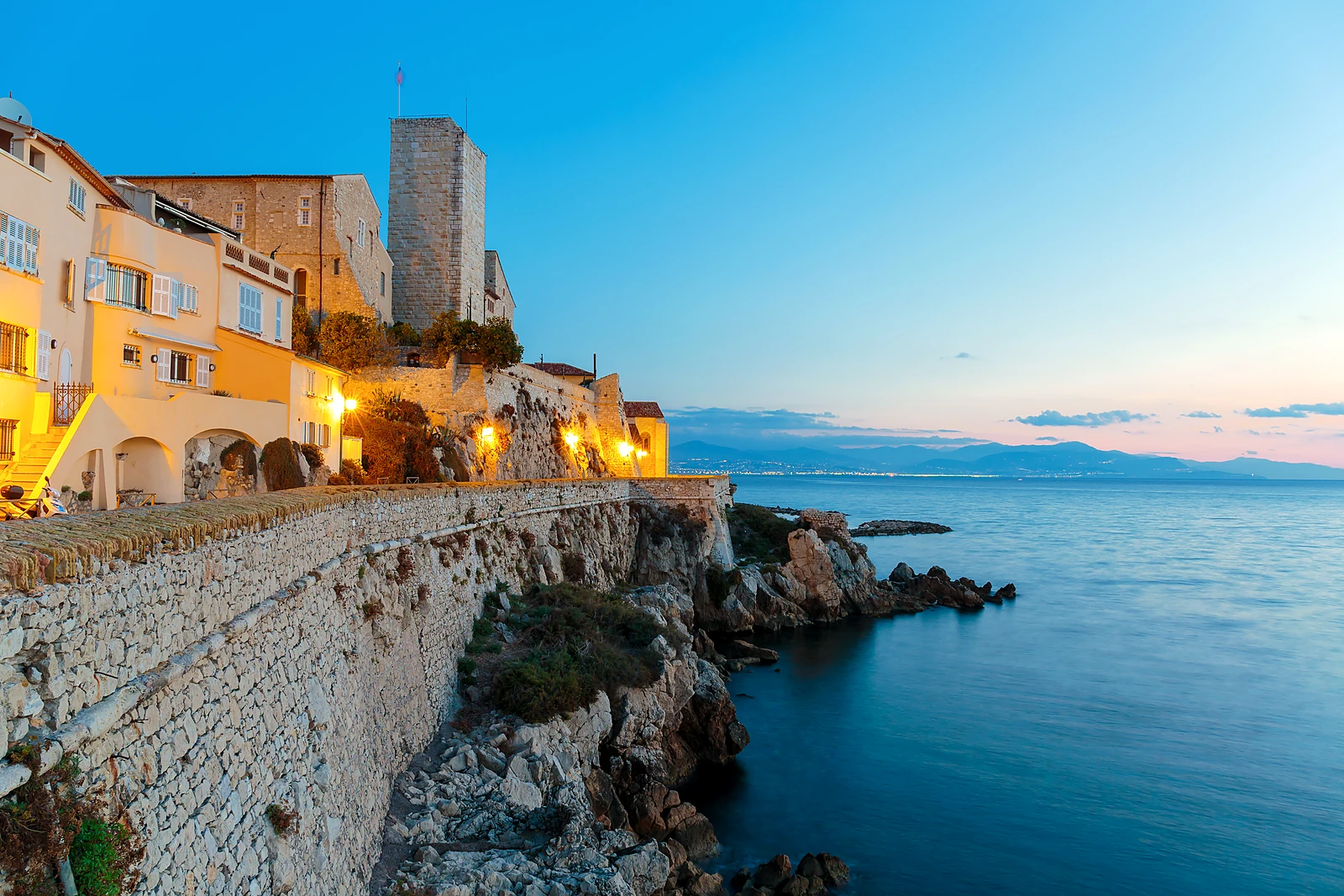
Old Antibes is not a museum quarter; it is a lived-in Mediterranean town wrapped in sixteenth-century walls. Washing dries between shutters, boules click on the squares, and the sea appears at the end of half its streets. Everything worth seeing sits inside twenty minutes’ walk — the ramparts, the covered market, a cathedral, a castle Picasso worked in, and a star fort across the water. Here is how to read it, and where to go deeper on each.
The ramparts and the sea front
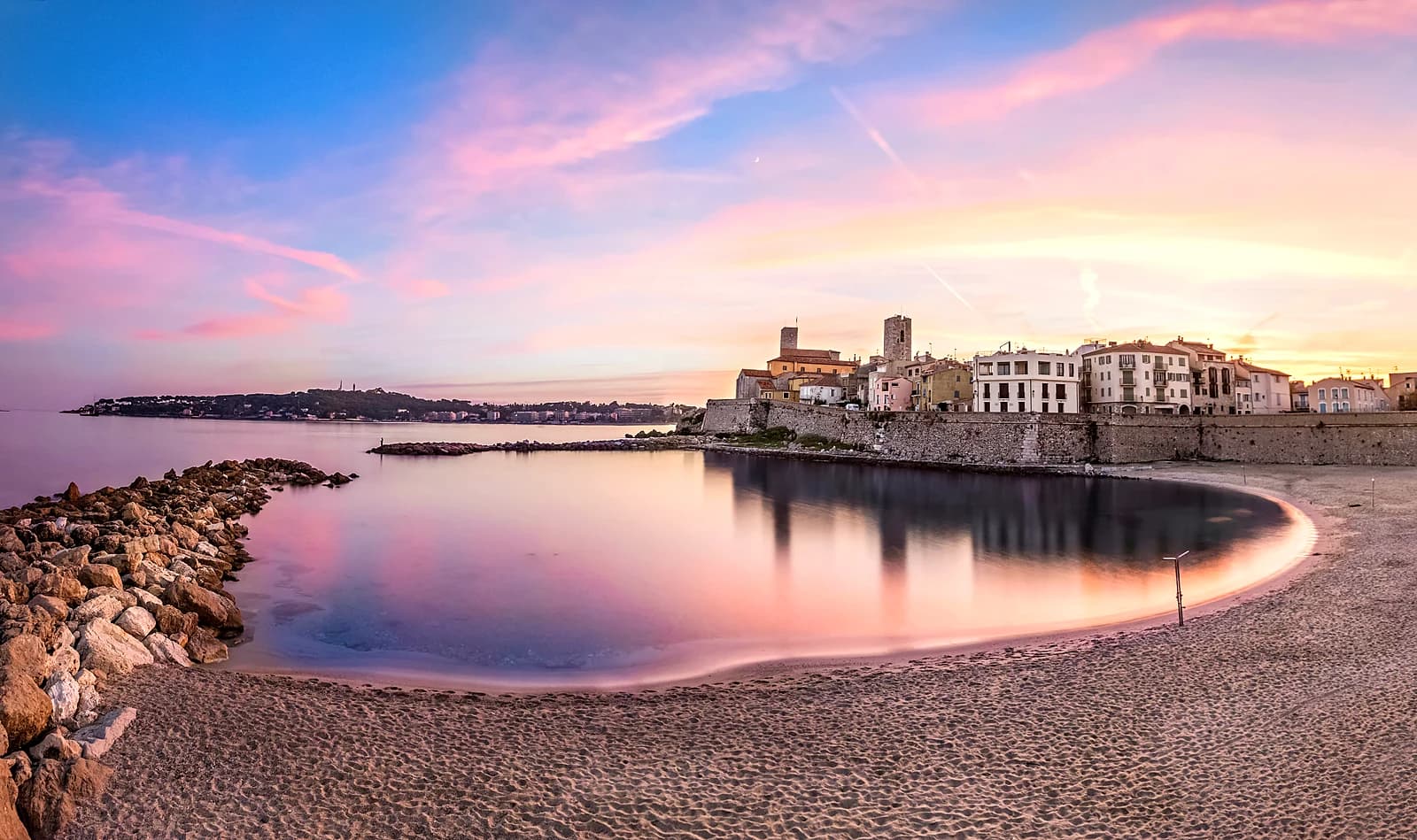
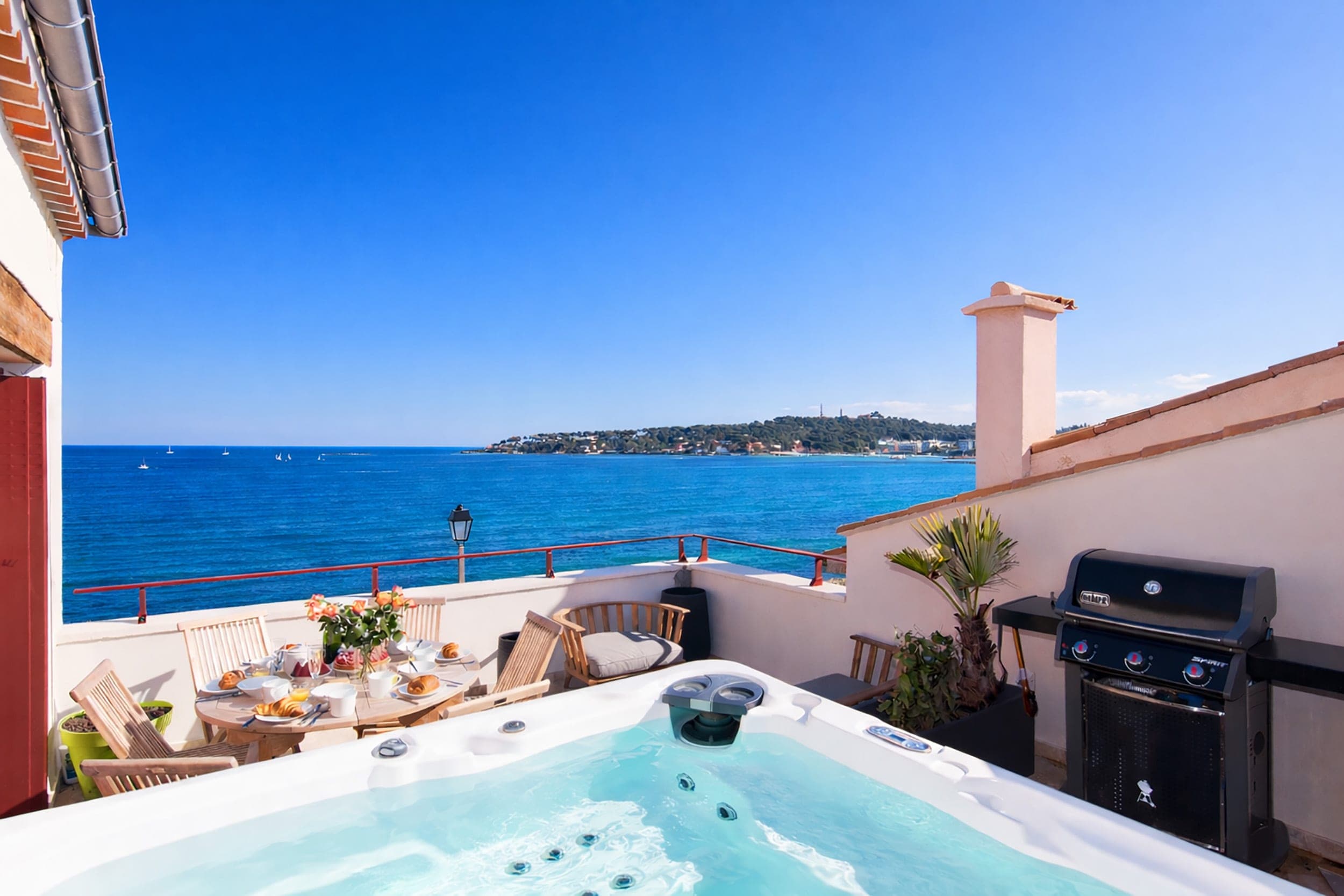
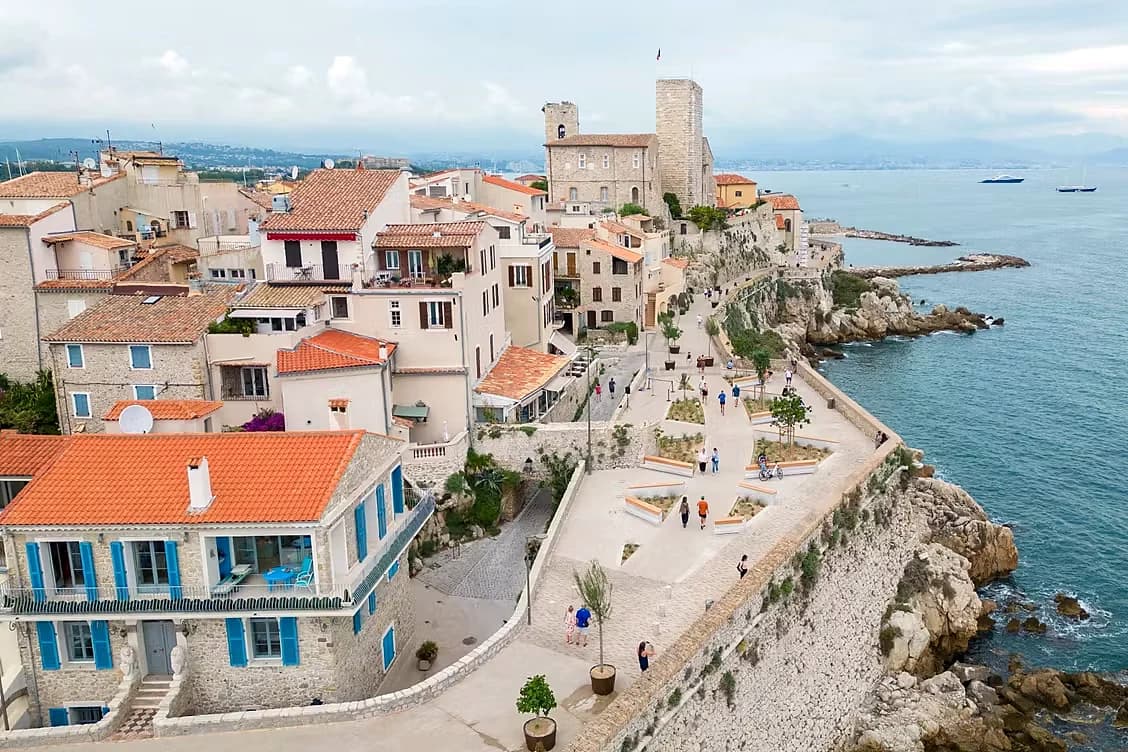
Walk the Promenade Amiral de Grasse along the sea wall from the cathedral towards the Porte de l’Orme: on one side the old town, on the other the full sweep of the Baie des Anges with the Alps behind. At golden hour it is the most beautiful free spectacle in Antibes.
Maison Marina sits directly on these ramparts; several of our other houses are a street away.
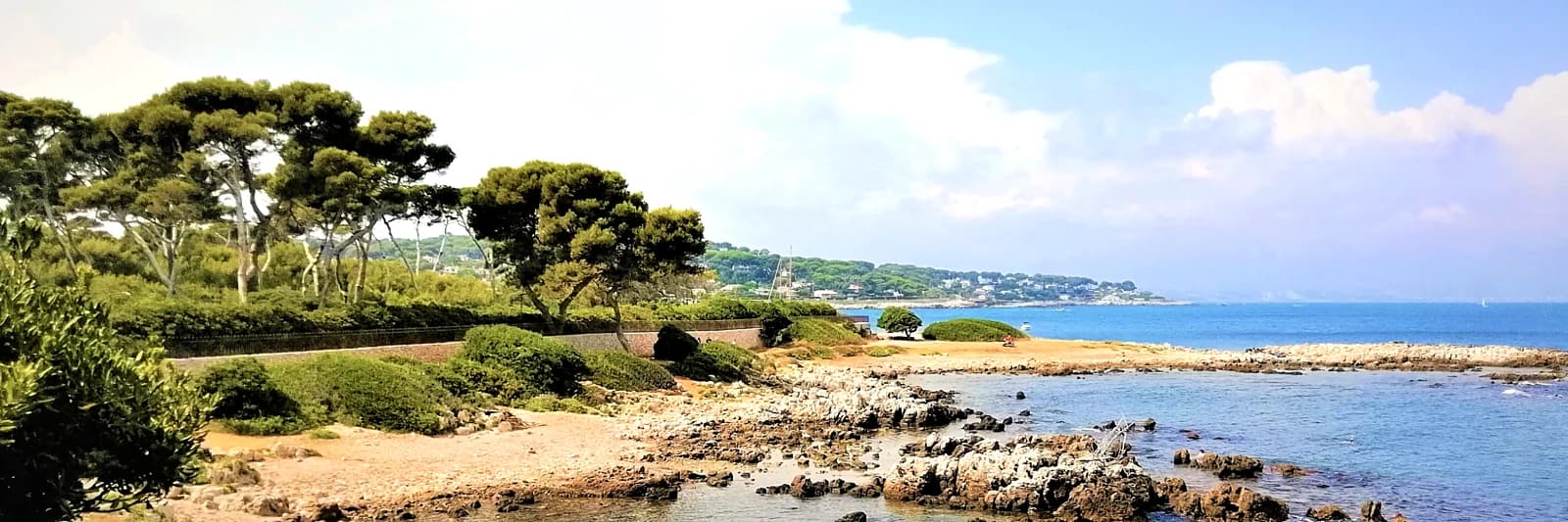
The coastal path around the Cap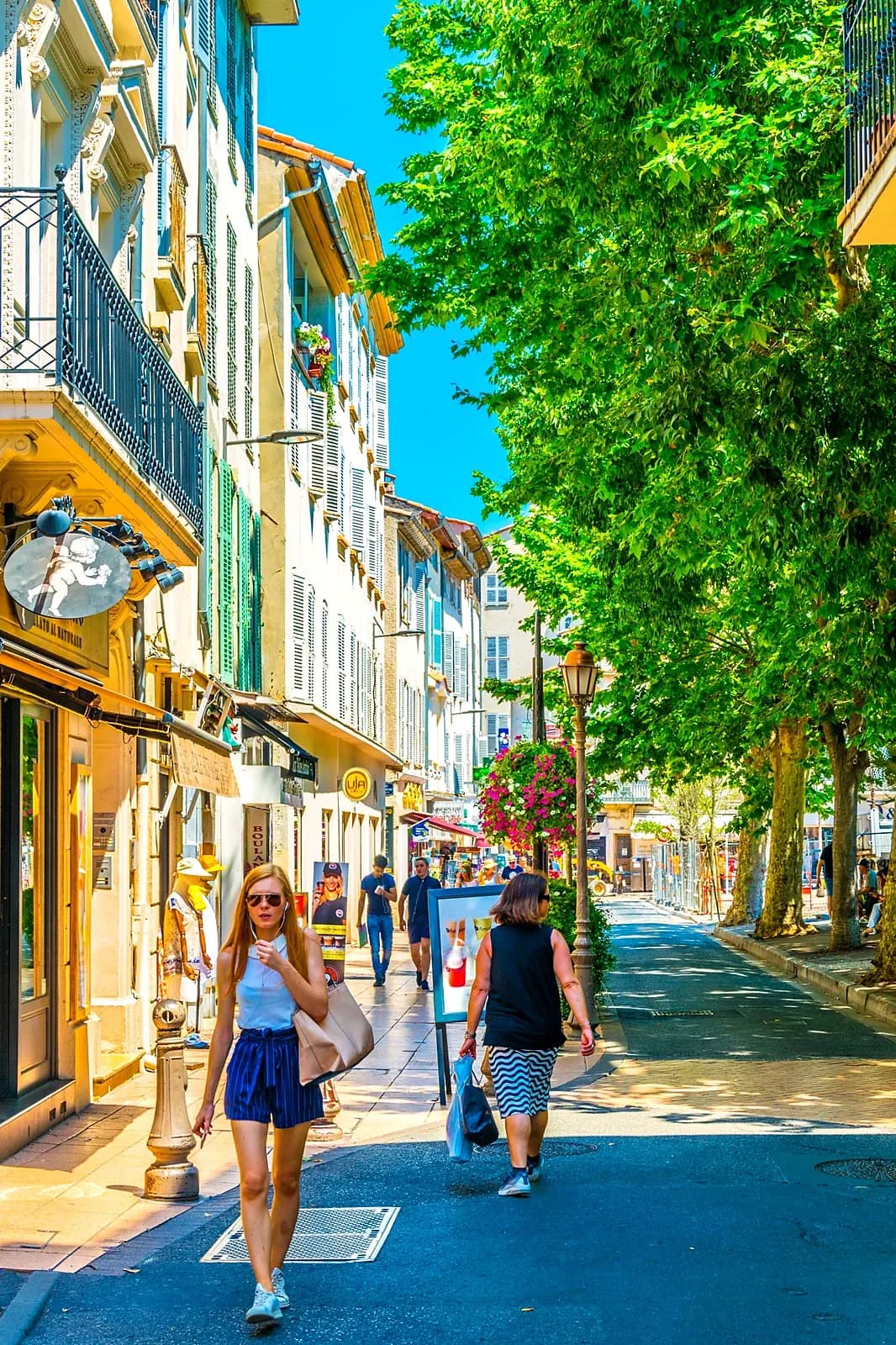
The Safranier and the artisan streets
South of the ramparts lies the Commune Libre du Safranier — a 'free commune' of flowered lanes that has elected its own symbolic mayor since 1966. Rue du Bas-Castelet and its neighbours are the postcard: vines, ochre façades, tiny squares.
Between Place Nationale and the market, rue Sade, rue de la République and rue James Close hold the galleries, workshops and food shops that keep the old town alive year-round. This slower art de vivre is precisely what Absoluty was founded to share.
Our addresses in Old Antibes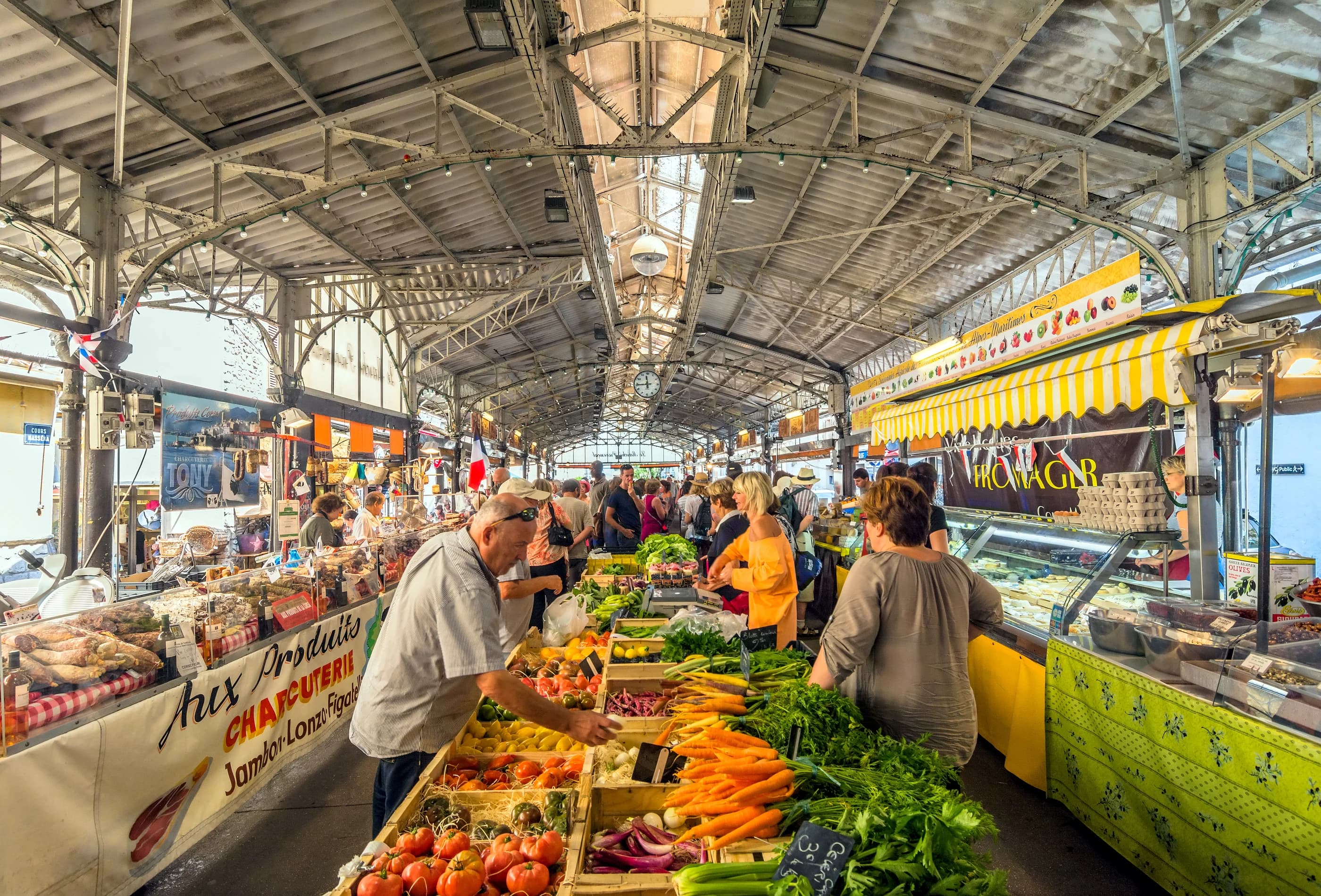
The Marché Provençal, under the iron canopy
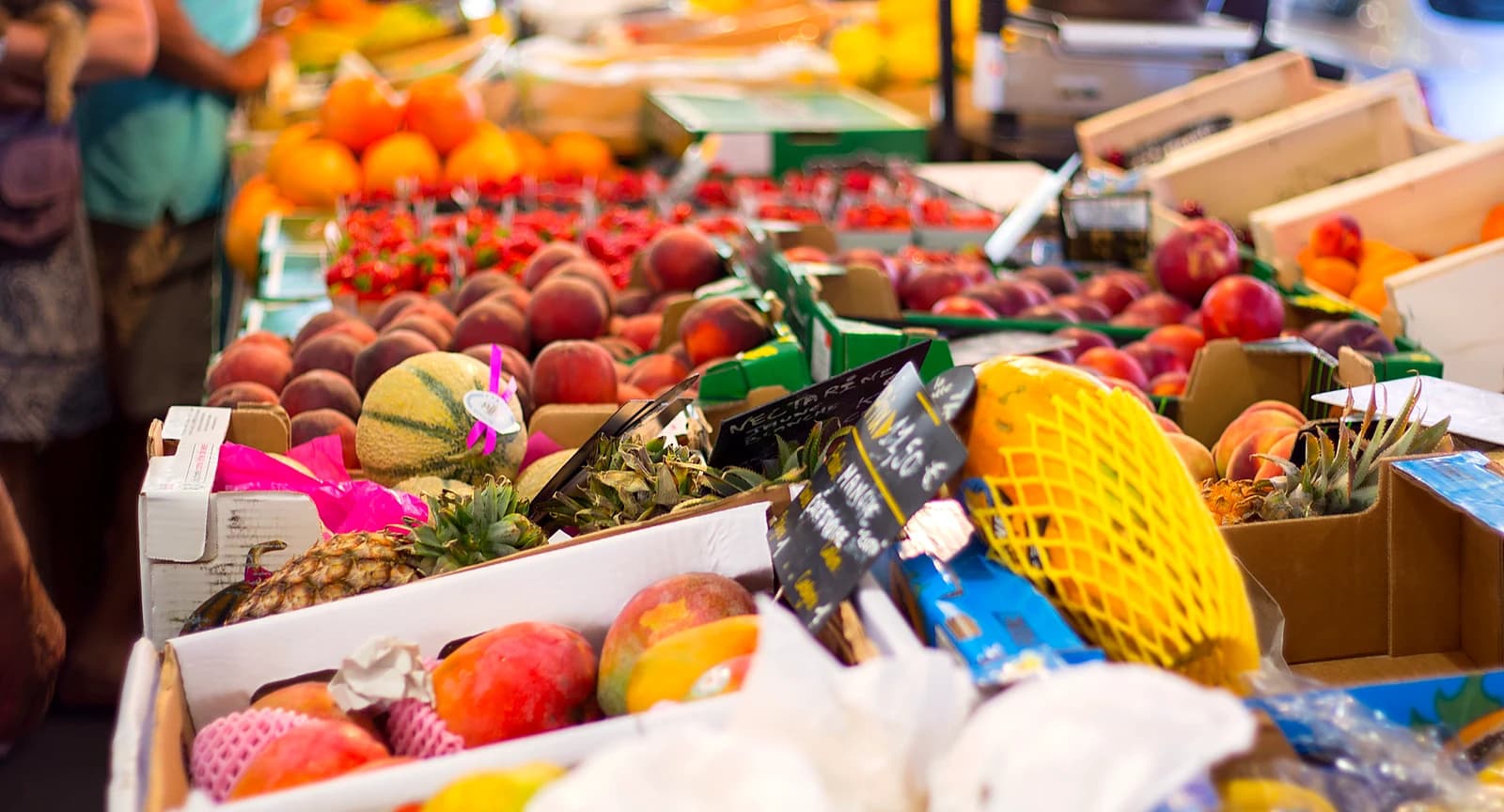
If the old town has a heart, it beats every morning under the iron roof of the Cours Masséna. Provençal vegetables, olives, cheeses, fish landed the same night, flowers, spices — and, from late afternoon in season, the canopy turns over to craft stalls and apéritif.
It is two or three minutes from every one of our houses, which is the whole point: you shop for the day rather than for the week, and lunch is decided by whatever looked best at eight in the morning.
The Provençal market, in detail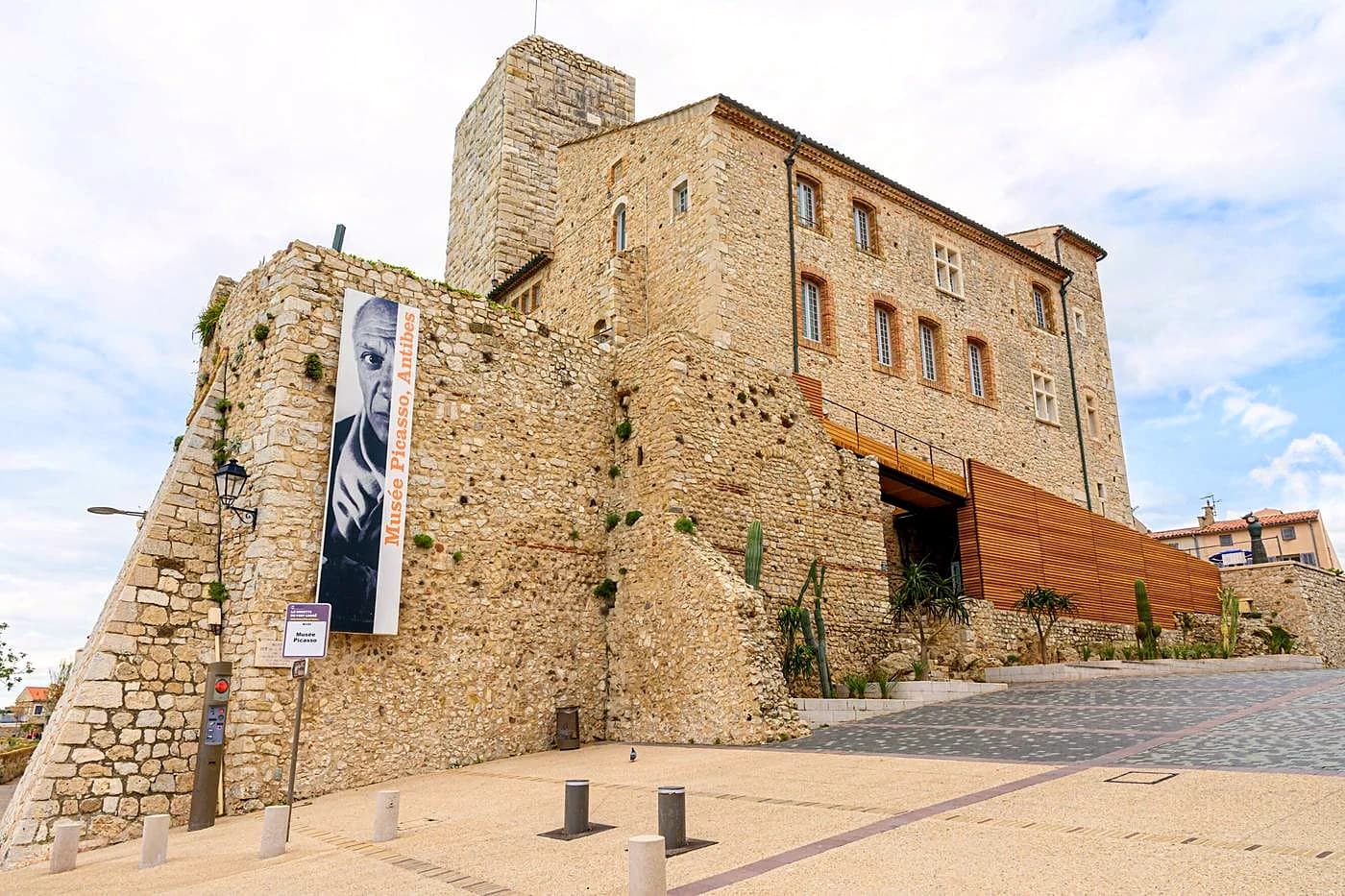
The cathedral, the château and Picasso
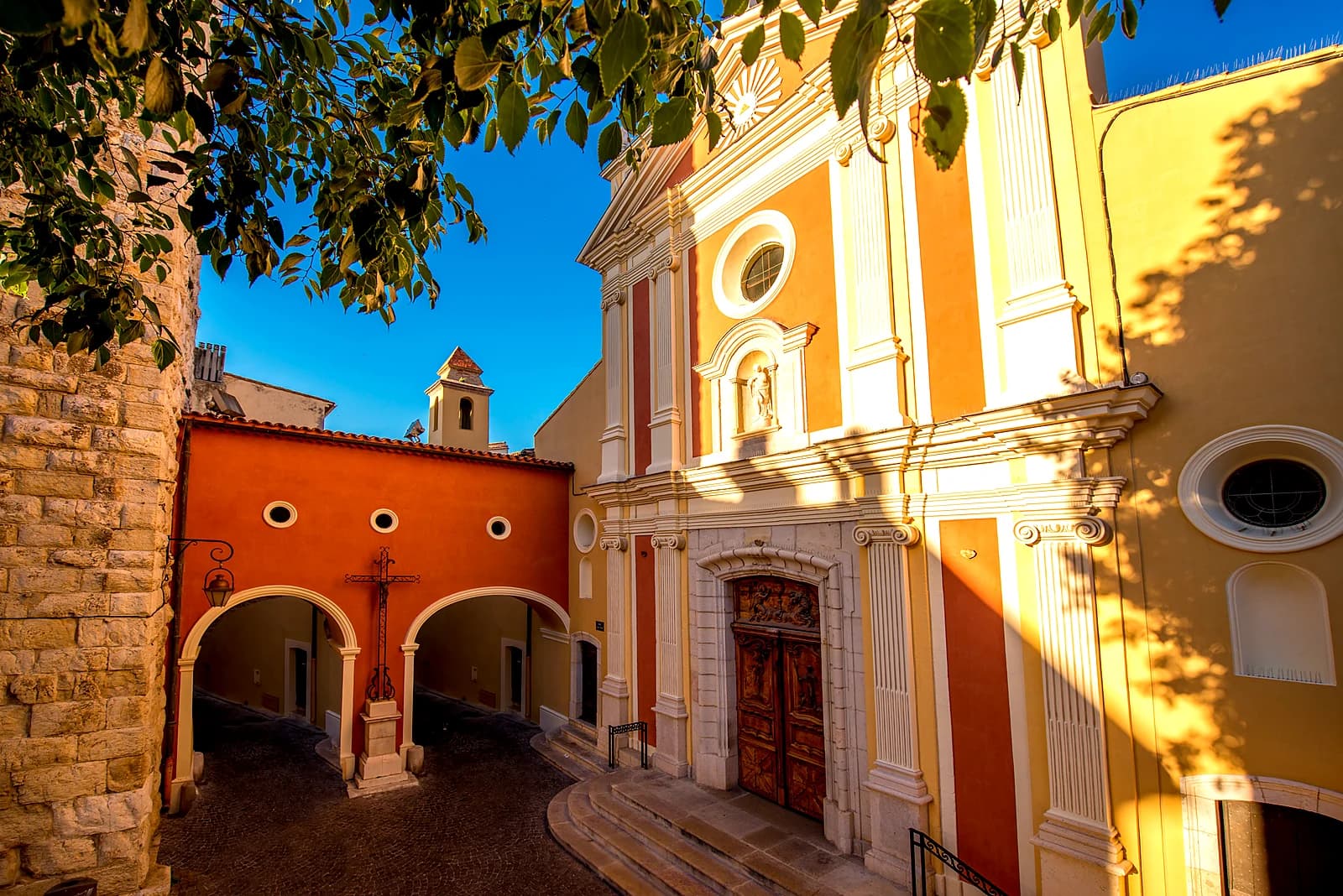
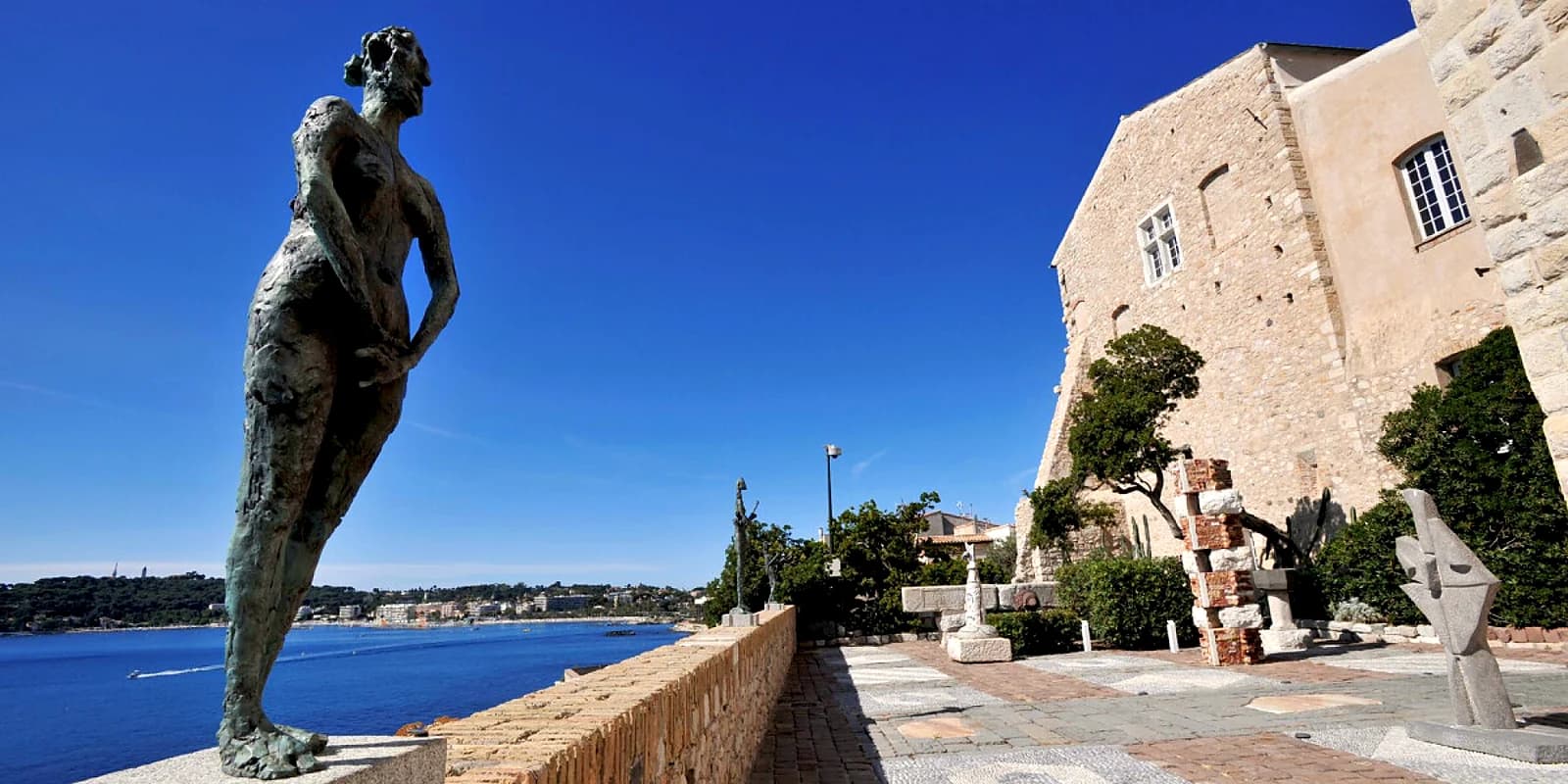
The oldest corner of the town holds two buildings side by side above the sea: Notre-Dame de la Platea, with its striped ochre façade and Romanesque choir, and the Château Grimaldi. In the autumn of 1946 Picasso was lent the château’s upper floor as a studio; he left what he painted there, and it became the first museum ever dedicated to him.
Go for the terrace as much as the collection — sculpture, the sea below, and the whole bay on a clear day.
The Picasso Museum, in detail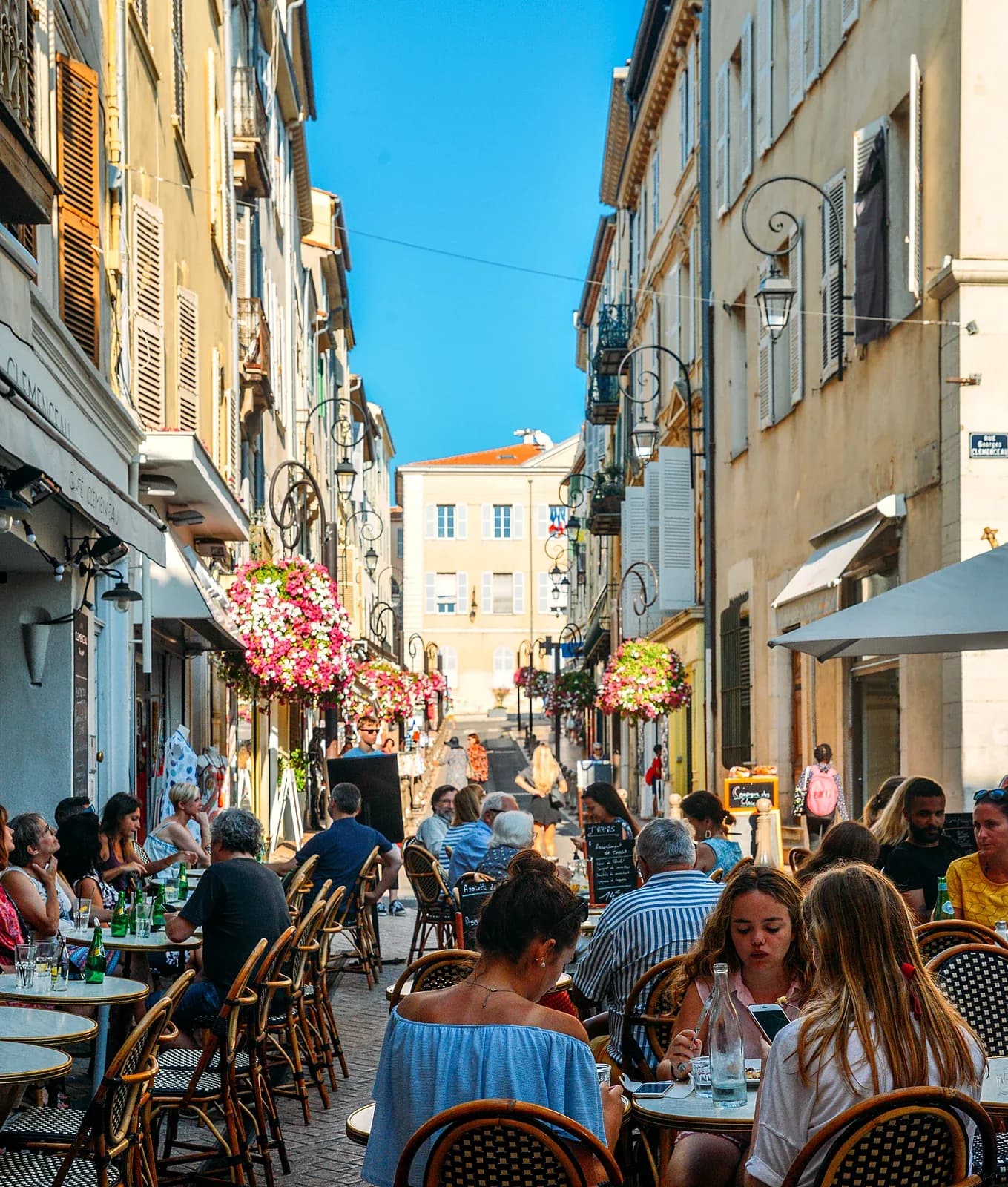
Coffee in the morning, tables in the evening
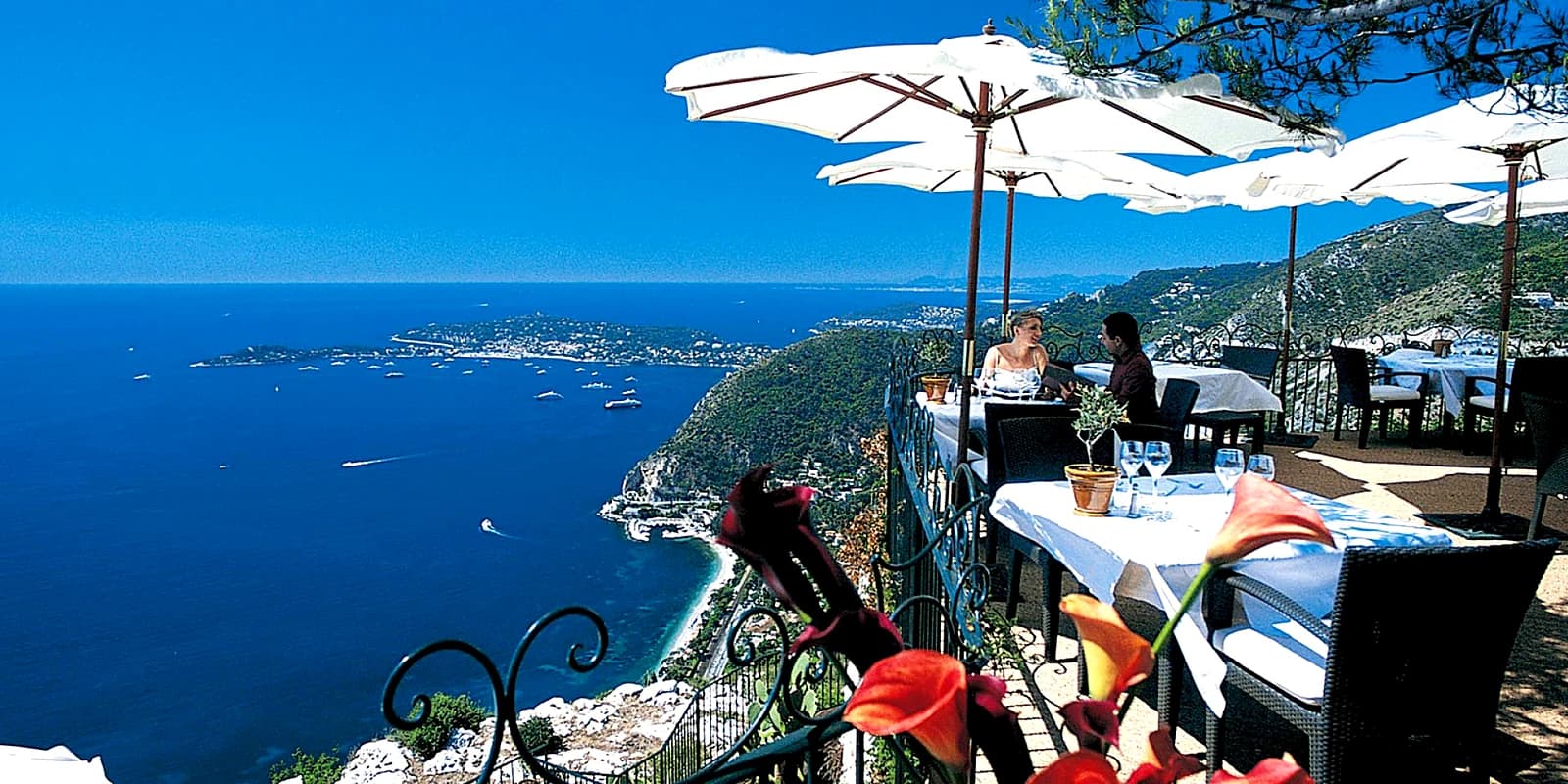
The squares fill in stages: coffee and the newspaper before nine, apéritif from six, dinner late and unhurried. Place Nationale and the streets around rue Clemenceau carry most of the terraces; the smaller squares of the Safranier keep the quiet ones.
Eating well here rarely means eating expensively — the old town’s best tables are small, family-run, and full by eight.
Eating well in Old Antibes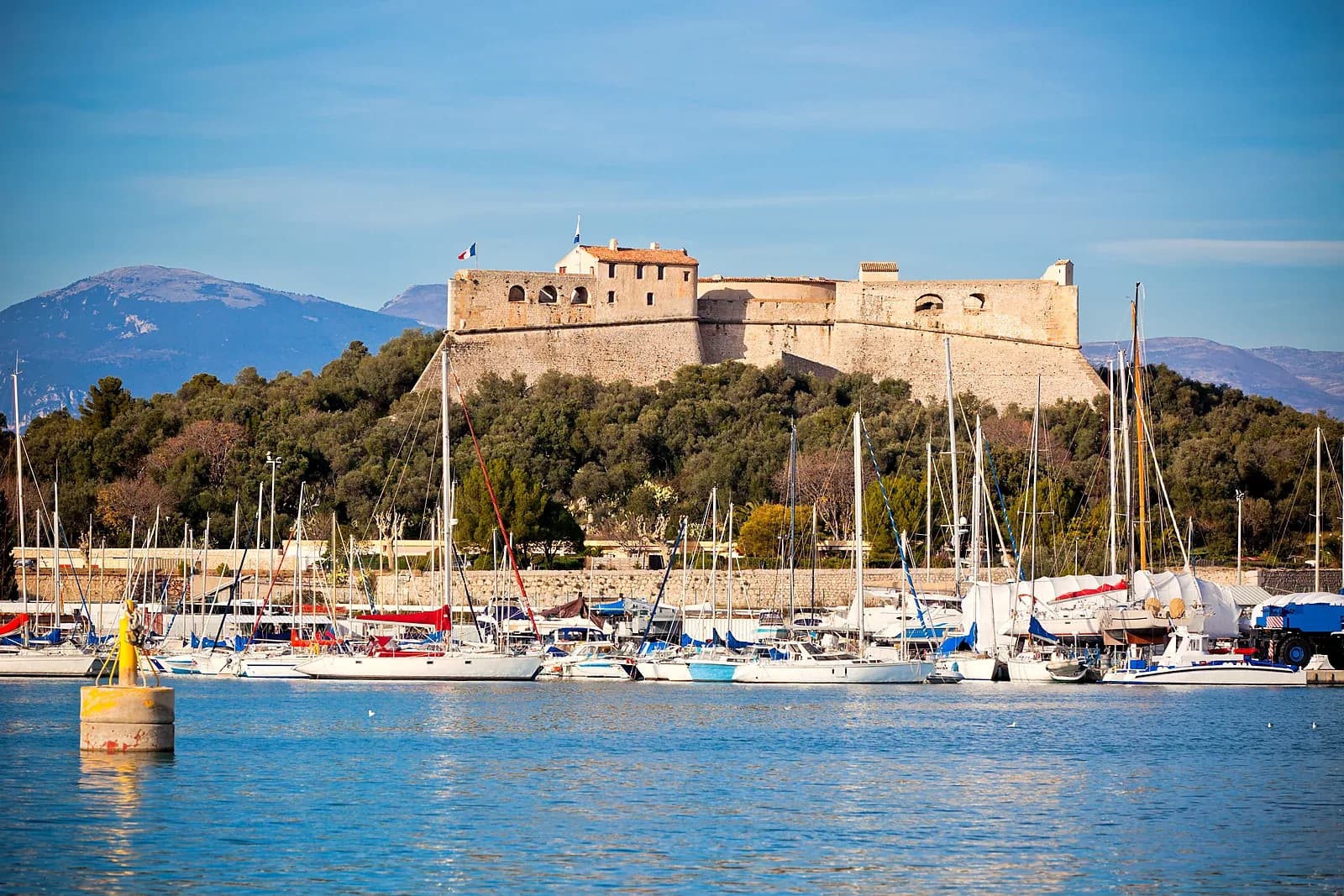
Across the water: Port Vauban and the Fort Carré
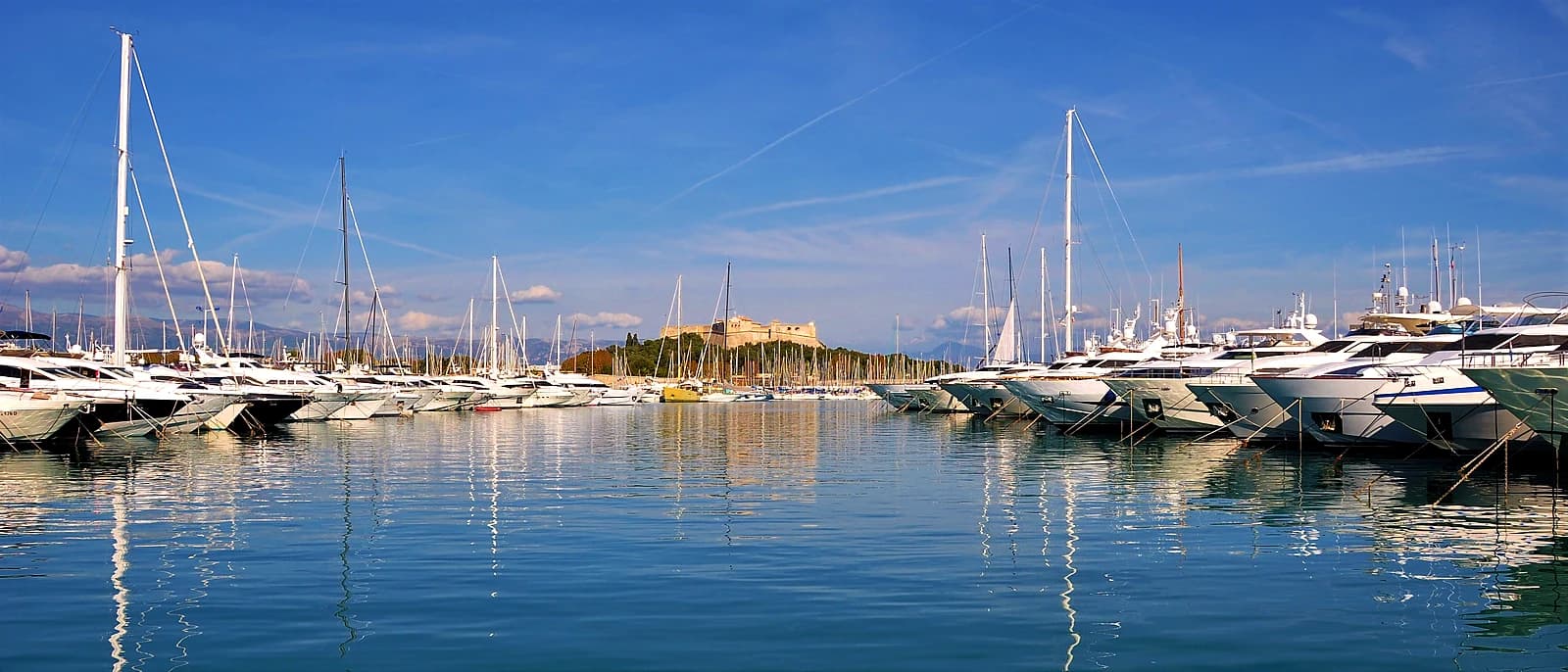
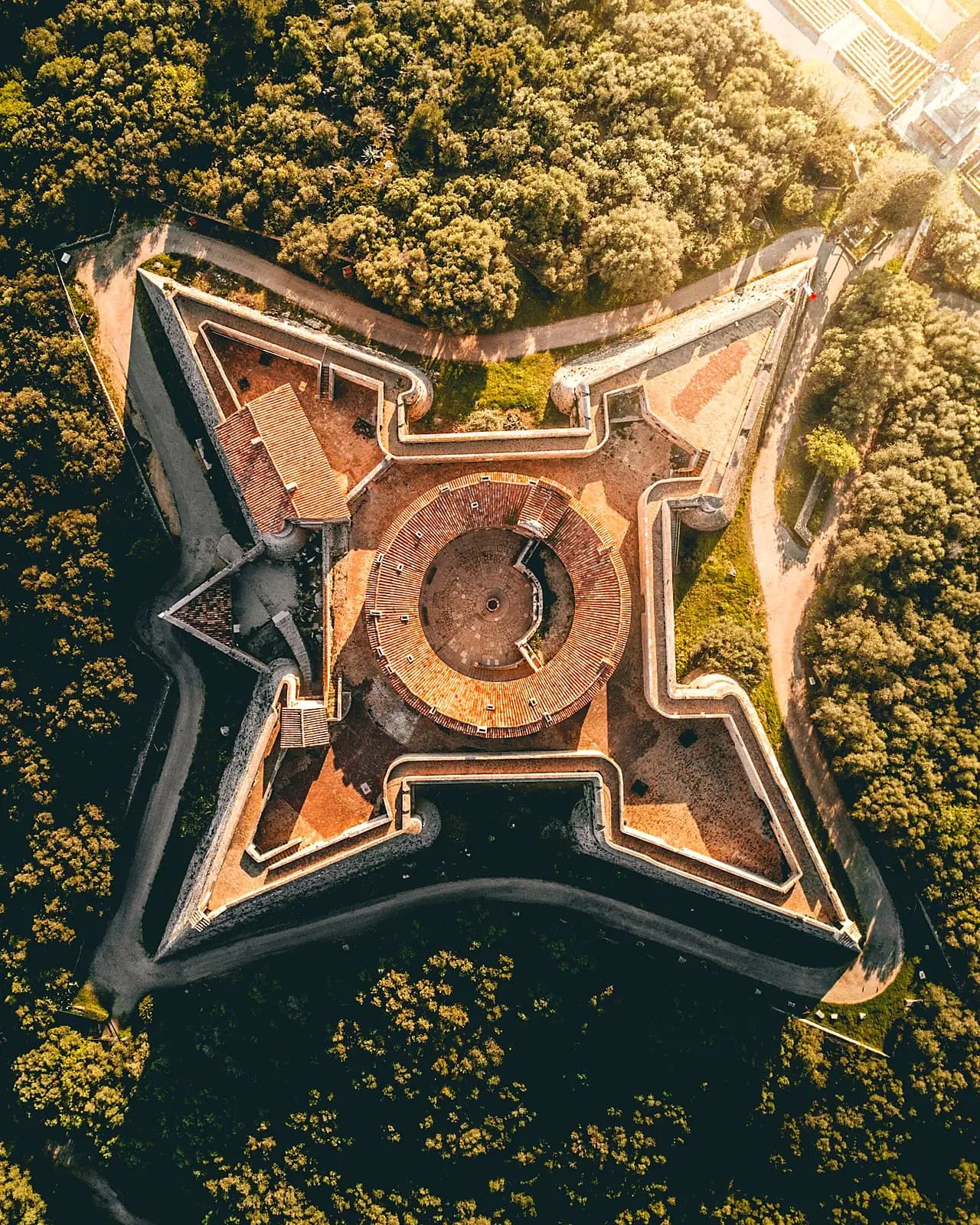
Step outside the walls and the harbour opens: Port Vauban, the largest marina in Europe, where fishing pointus share the water with the superyachts of the Quai des Milliardaires. Beyond it, on its own rocky headland, the sixteenth-century Fort Carré keeps the best panorama in Antibes.
The whole loop — ramparts, harbour, fort and back — is a comfortable morning on foot from any of our houses.
The Fort Carré, in detailA first morning, in order
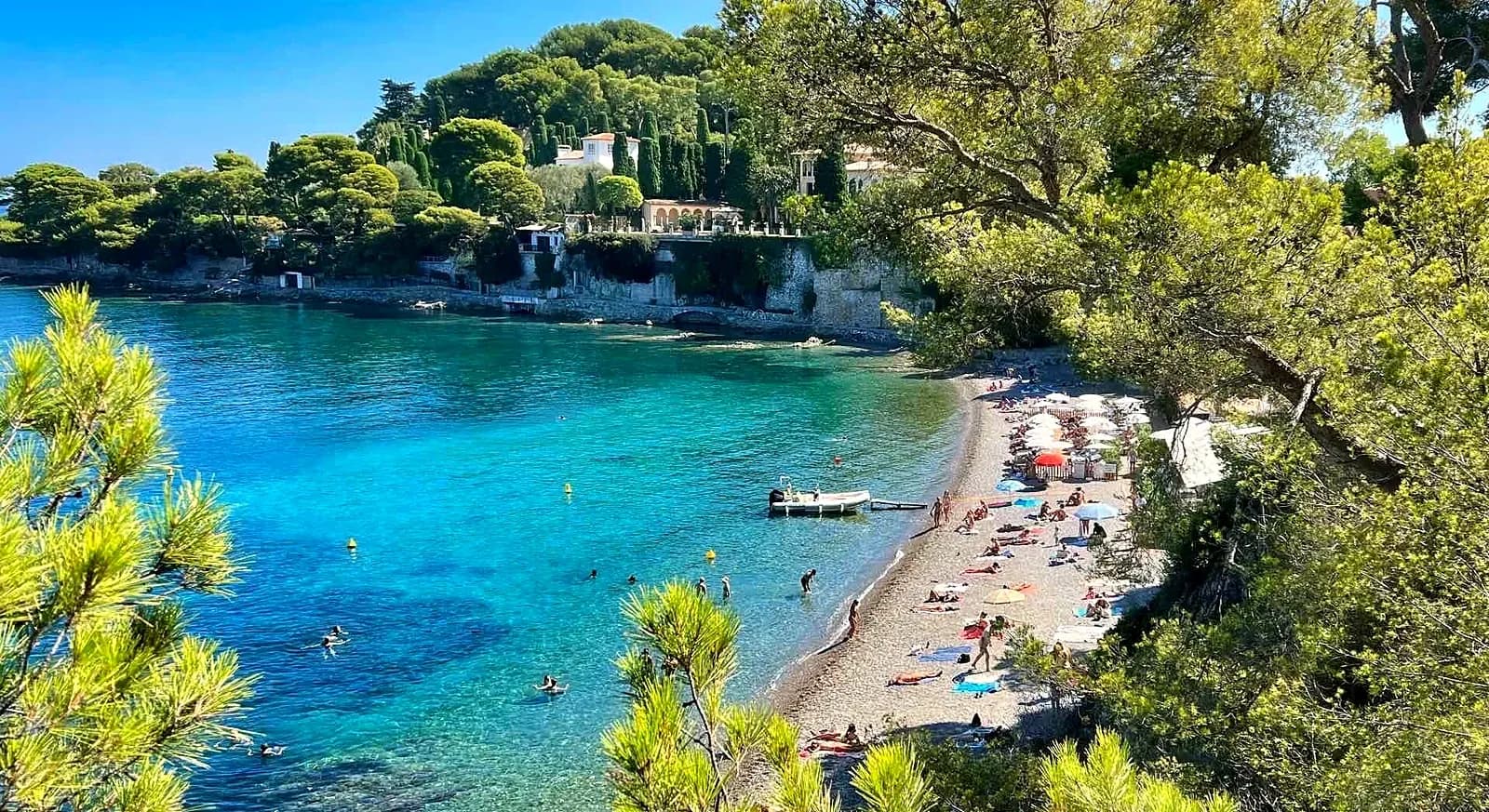
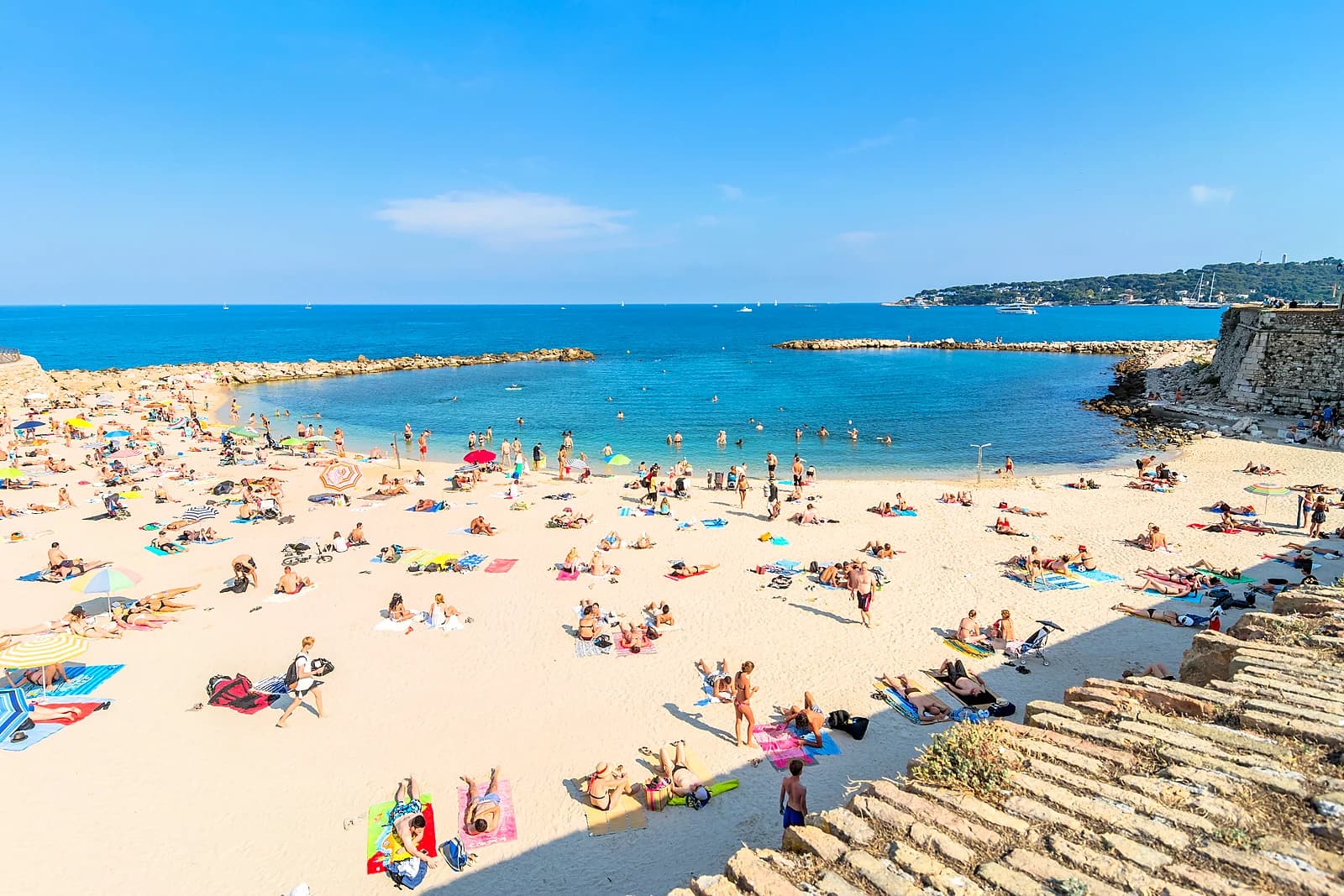
If you have one morning and want the whole town in it: start at the market at eight while it is still a market and not yet a photograph. Cross to the cathedral square and the château by nine. Walk out along the Promenade Amiral de Grasse with the sea on your left, and drop into the Safranier when the lanes tempt you. Coffee on Place Nationale. Swim at La Gravette before lunch — it is five minutes downhill, and the water is best before the town wakes up properly.
That is the old town in four hours. Everything else in these guides is what you do with the rest of the week.
Everything on this page is minutes from our doors.
Seven restored houses inside the old town — live availability, transparent prices, and your hosts two streets away.
More from the guide
View the full guide →