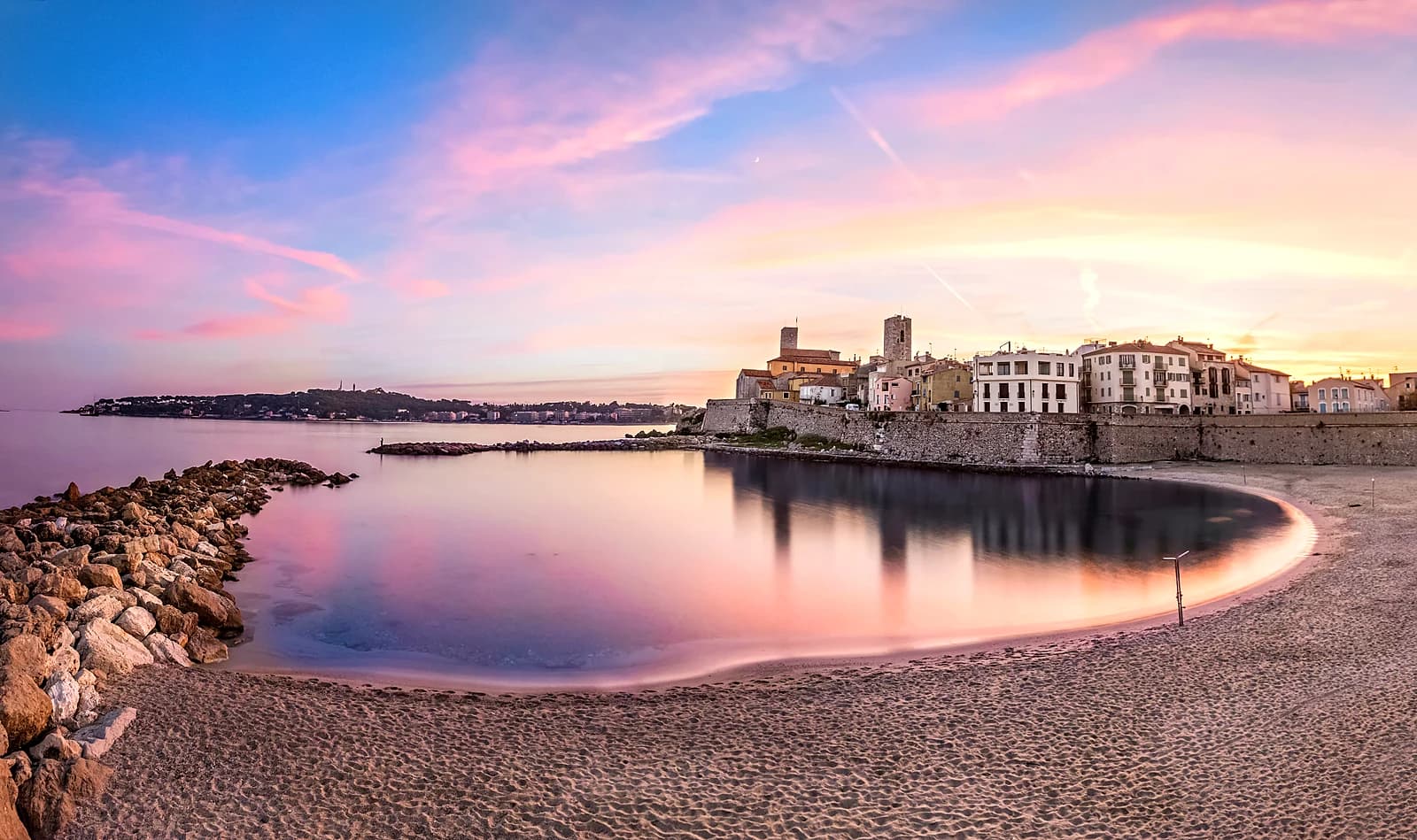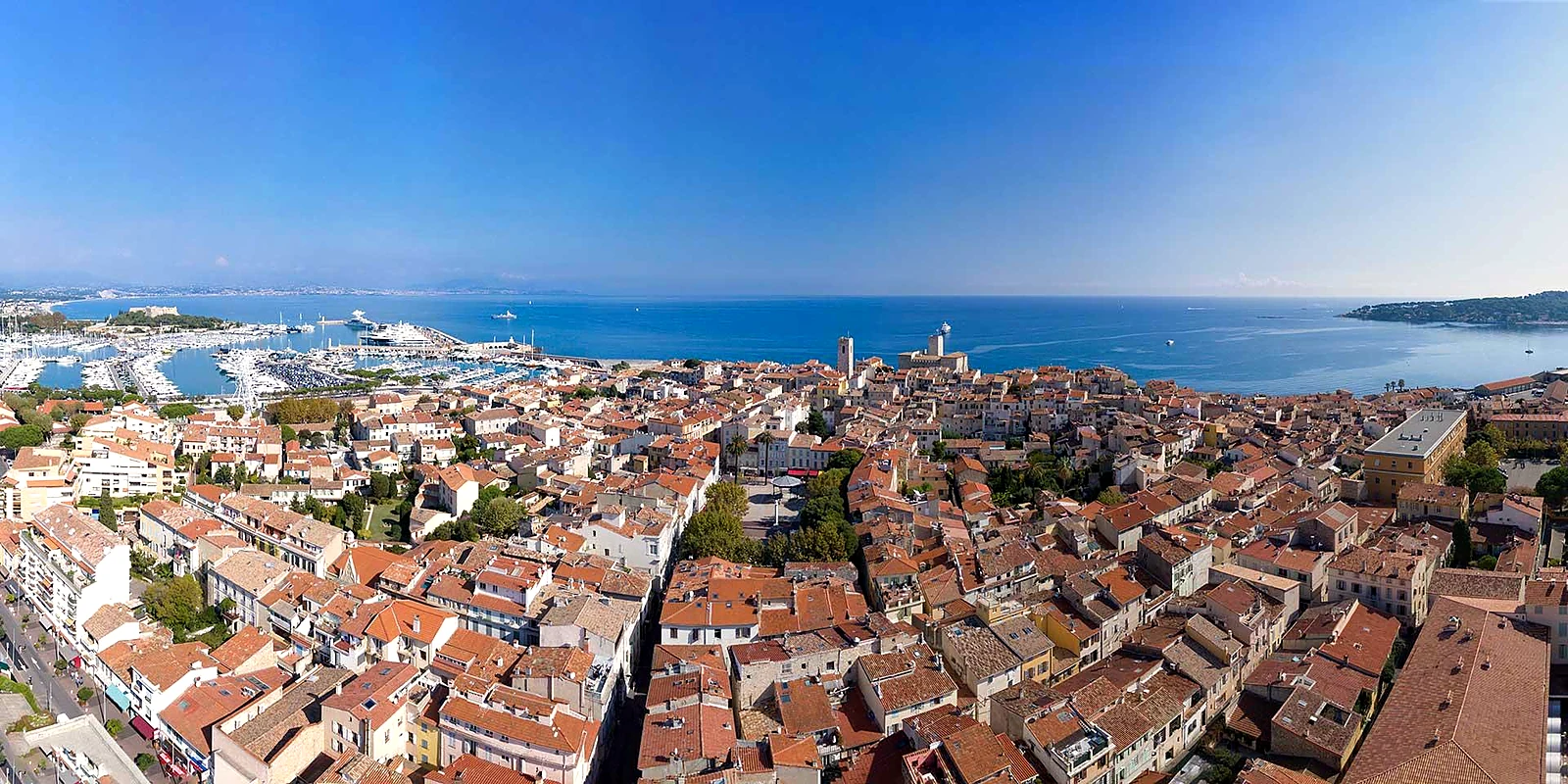
Old Antibes is easier to reach than its quiet suggests. Nice Côte d’Azur is twenty-one kilometres up the coast, it takes nonstop flights from five American cities, and the last stretch of the journey — the one inside the ramparts — is done on foot, because the streets were laid out before cars existed. Here is the honest version of the journey, without the numbers that change every season.
From Nice Airport to the Old Town
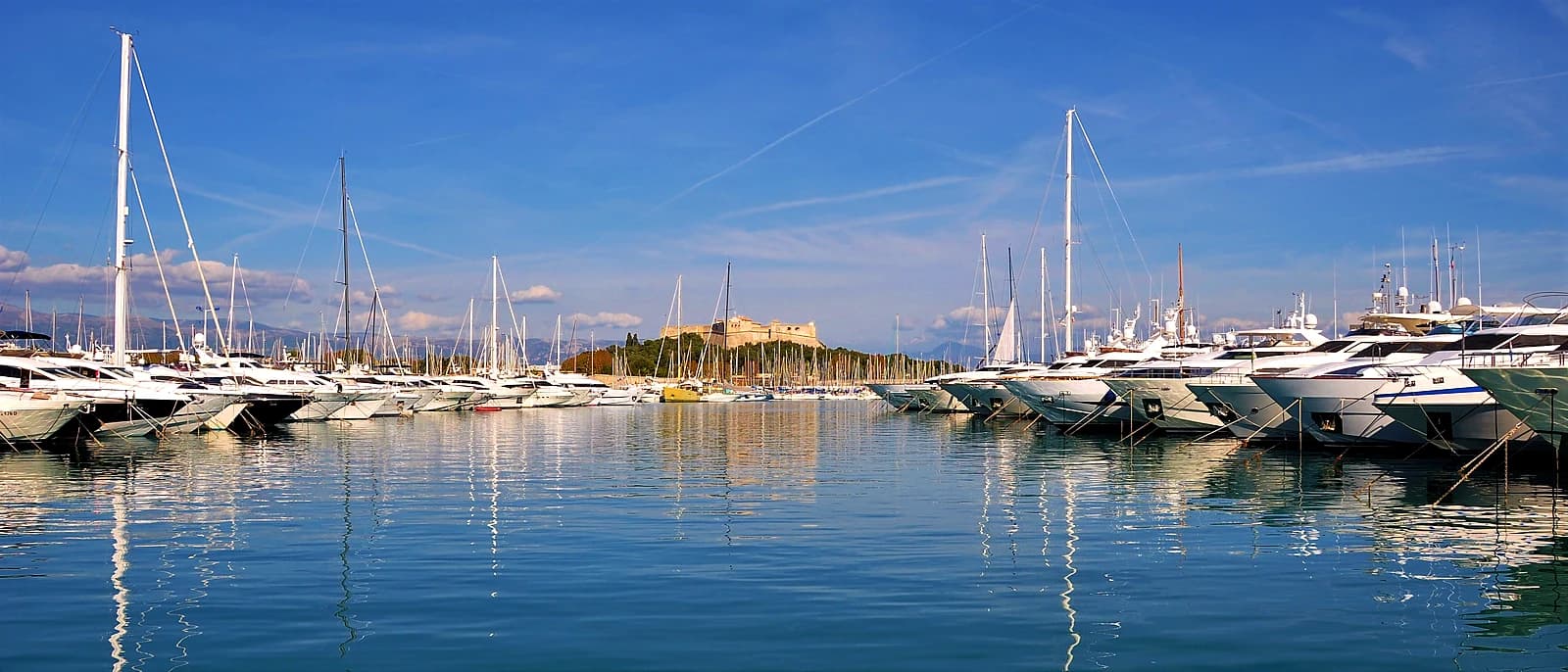
Nonstop from North America
Nice Côte d’Azur airport lists five nonstop destinations in the United States — New York, Boston, Washington, Philadelphia and Atlanta — flown by Delta, United and American, plus Montréal in Canada. Flying times run from roughly seven and a half hours from Montréal to nine from Atlanta.
All of these are seasonal routes. They open for the Riviera season and close again, and the exact dates move from one year to the next, so check the window for your travel dates rather than trusting a figure printed on any website — including ours. Outside the season, a single European connection through Paris, Amsterdam, London or Frankfurt puts you in Nice the same day.
From Europe, it is barely a journey
Geneva and Rome are an hour away, Paris and Frankfurt an hour and a half, Amsterdam and London around two, Oslo and Stockholm under three. The Gulf hubs connect Nice to Asia and Australia in one stop.
There is also the train, which people forget: the TGV runs from Paris to Antibes station, and the station is a twelve-minute walk from the old town. It is the only way to arrive without a transfer at all — you step off the platform and walk to the house.
The twenty-one kilometres from the airport
By taxi or private car it is around twenty-five minutes along the coast road, and the fare is fixed rather than metered on the airport run. It is the simplest option with luggage, and the one most of our guests take.
The economical version: express bus 82 runs between the airport and Antibes in roughly forty minutes with no change. Or take the tram from the terminals to Nice Saint-Augustin and a regional train down the coast — twelve to twenty minutes on the train, and it runs several times an hour. Allow around forty minutes door to door.
Whether to hire one at all is a separate question — what it adds over a week, where it waits while you are inside the ramparts, and the days it genuinely earns its keep. We answered it on its own page.
Do you need a car on the French Riviera?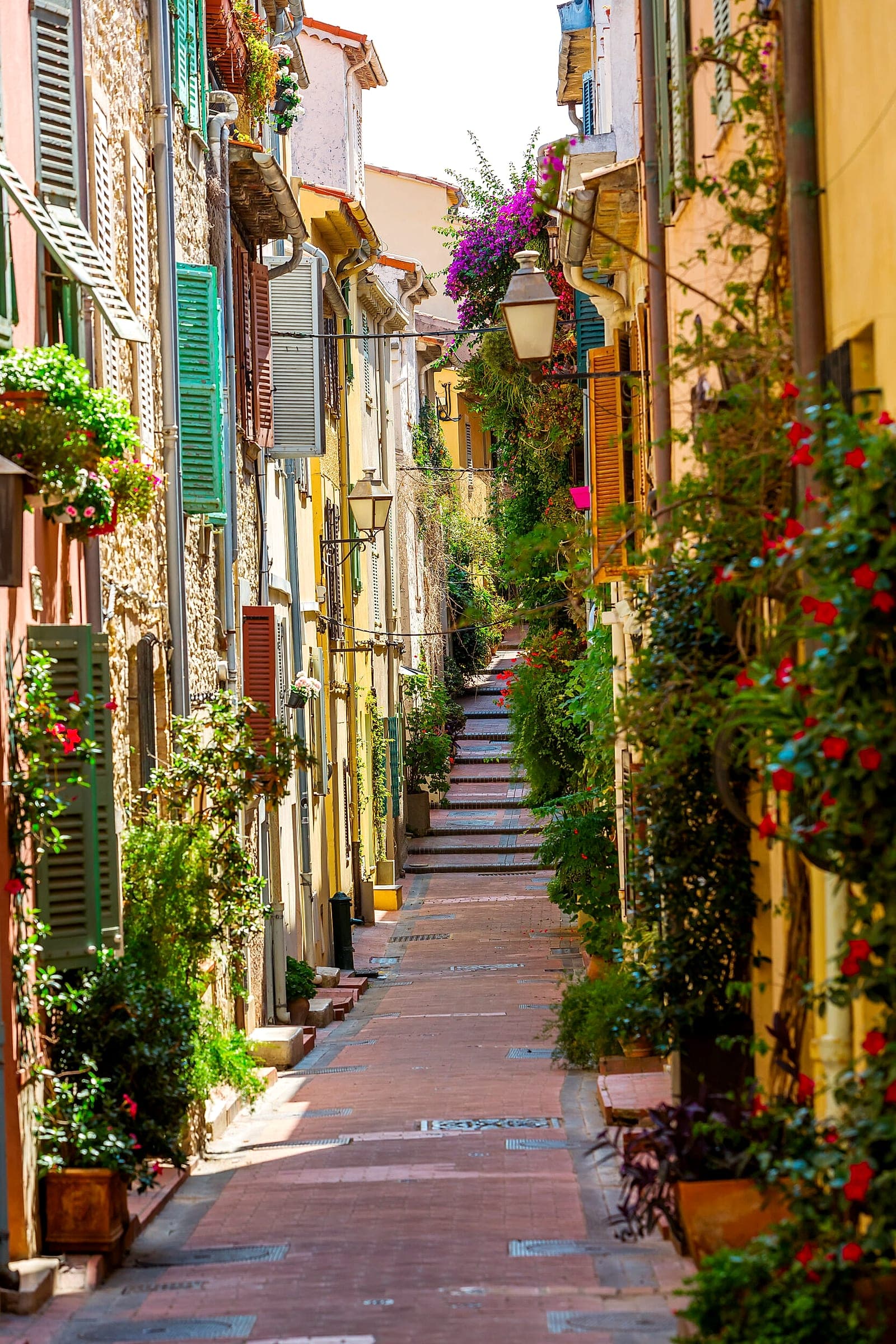
The last kilometre is on foot
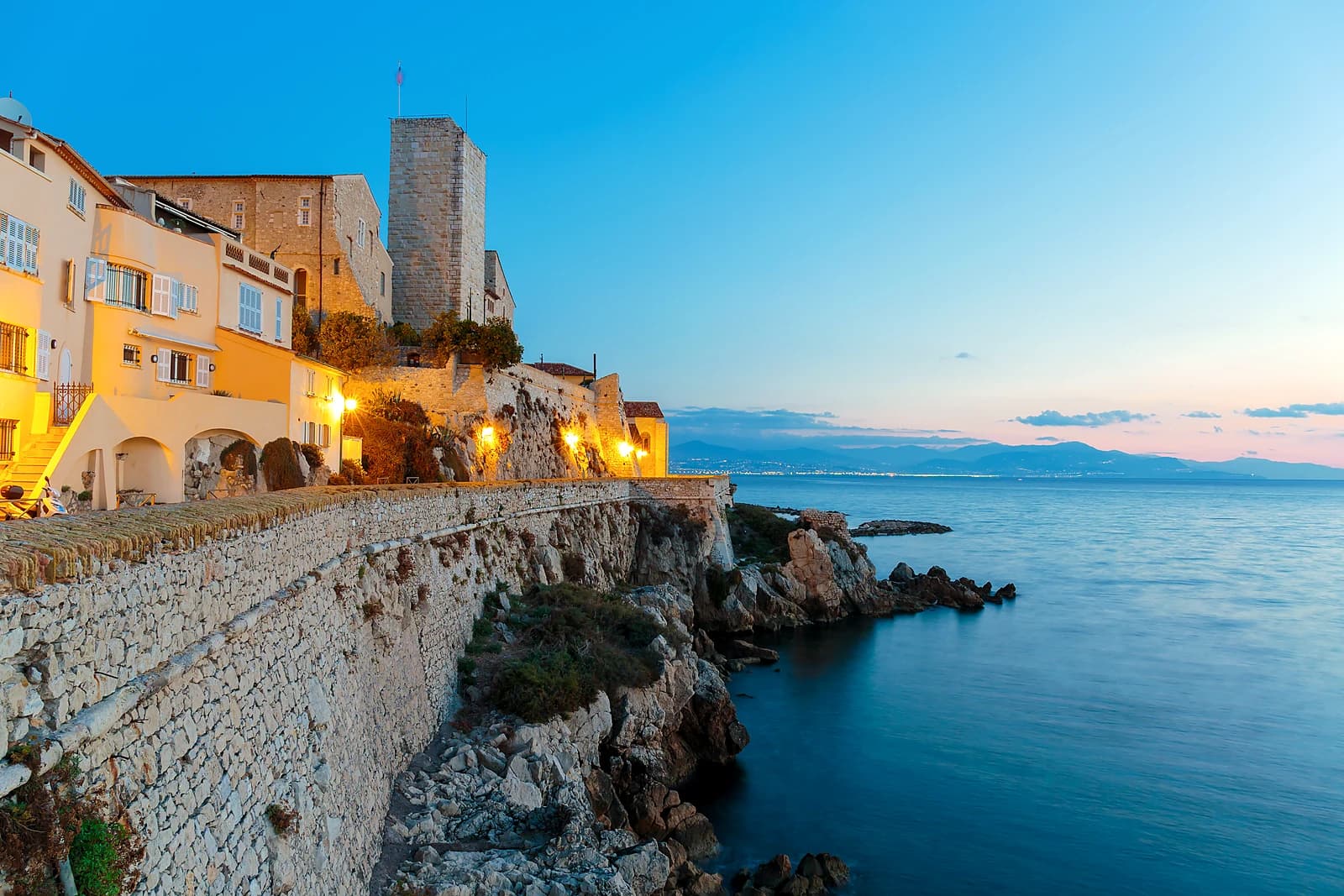
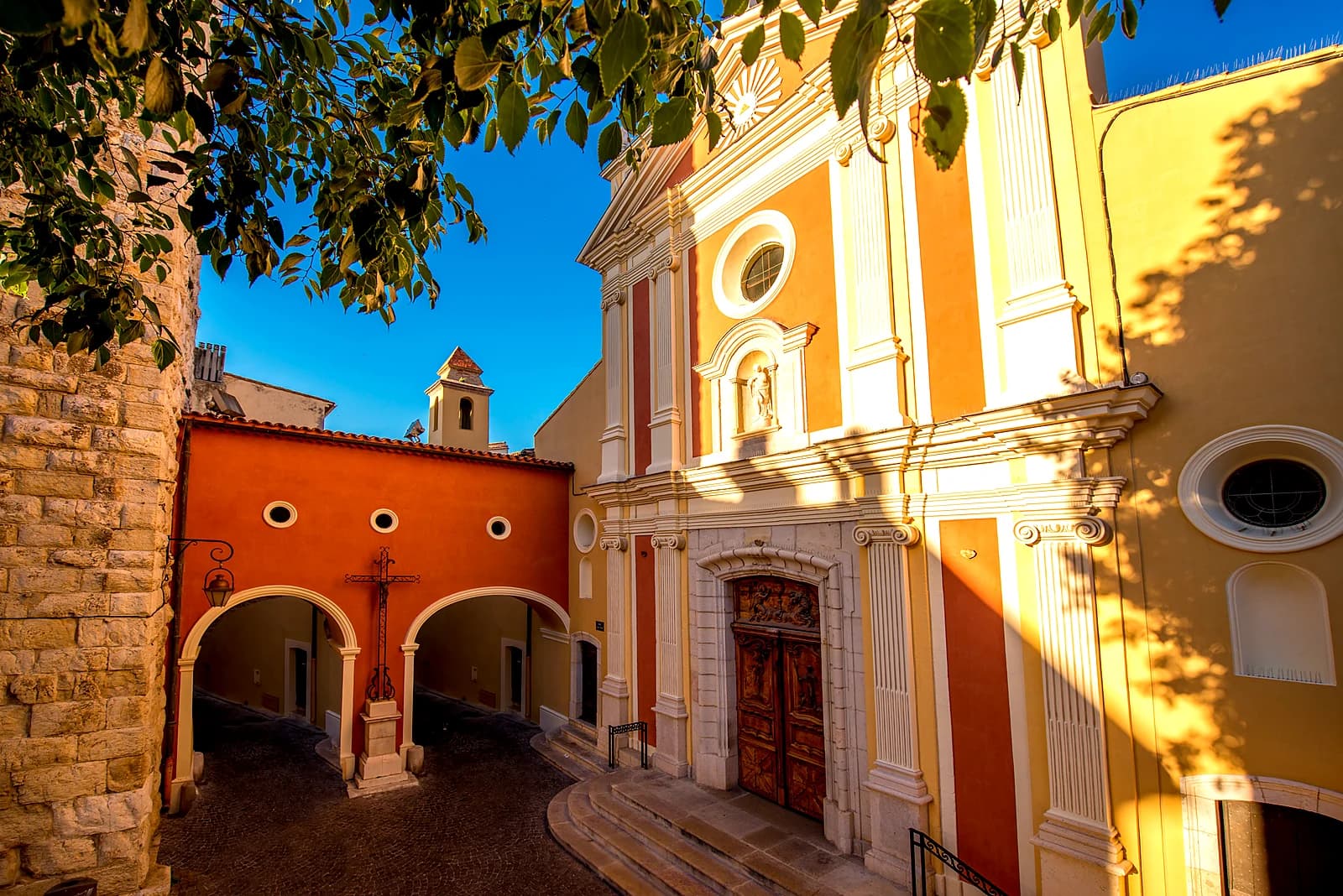
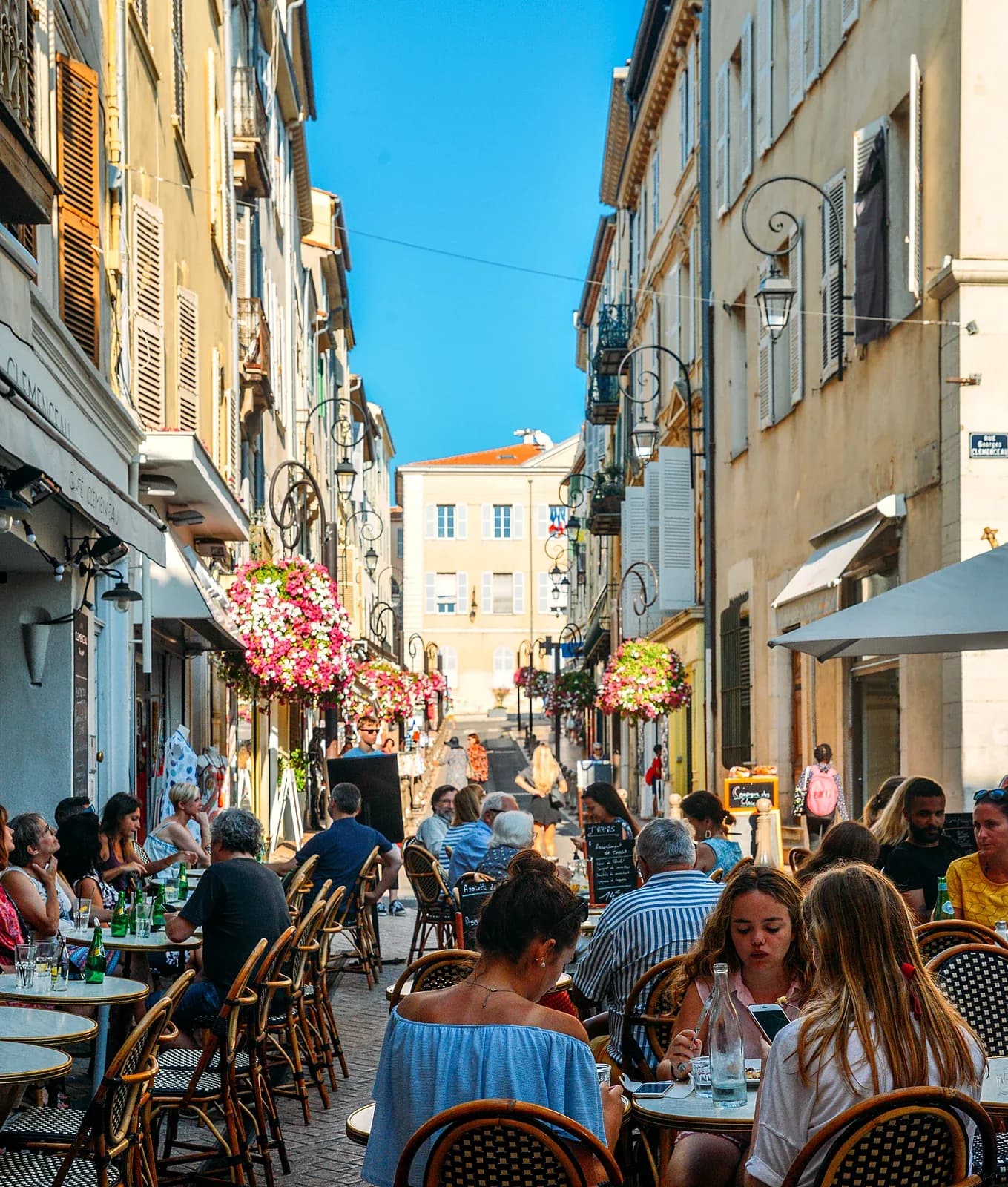
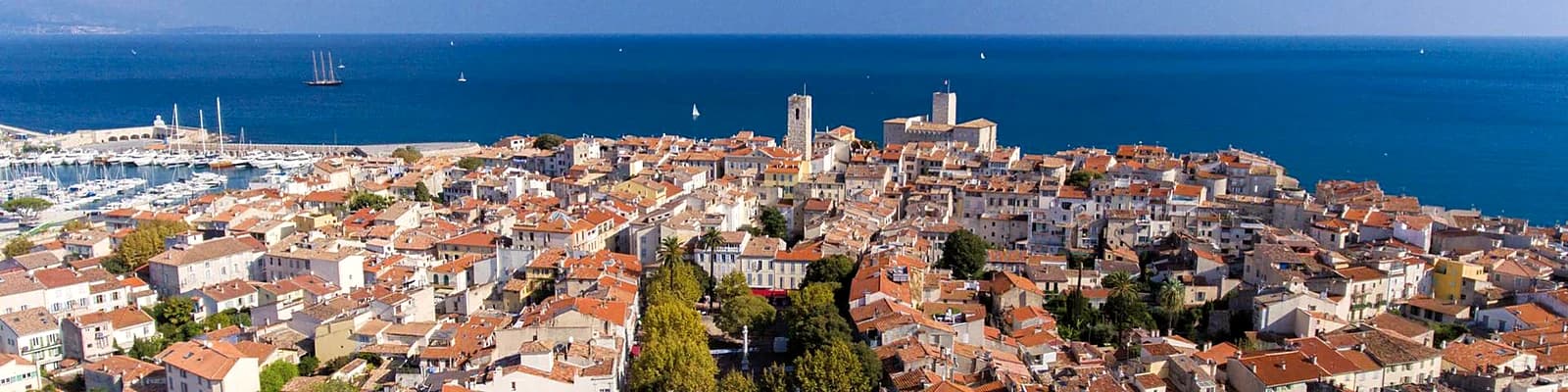
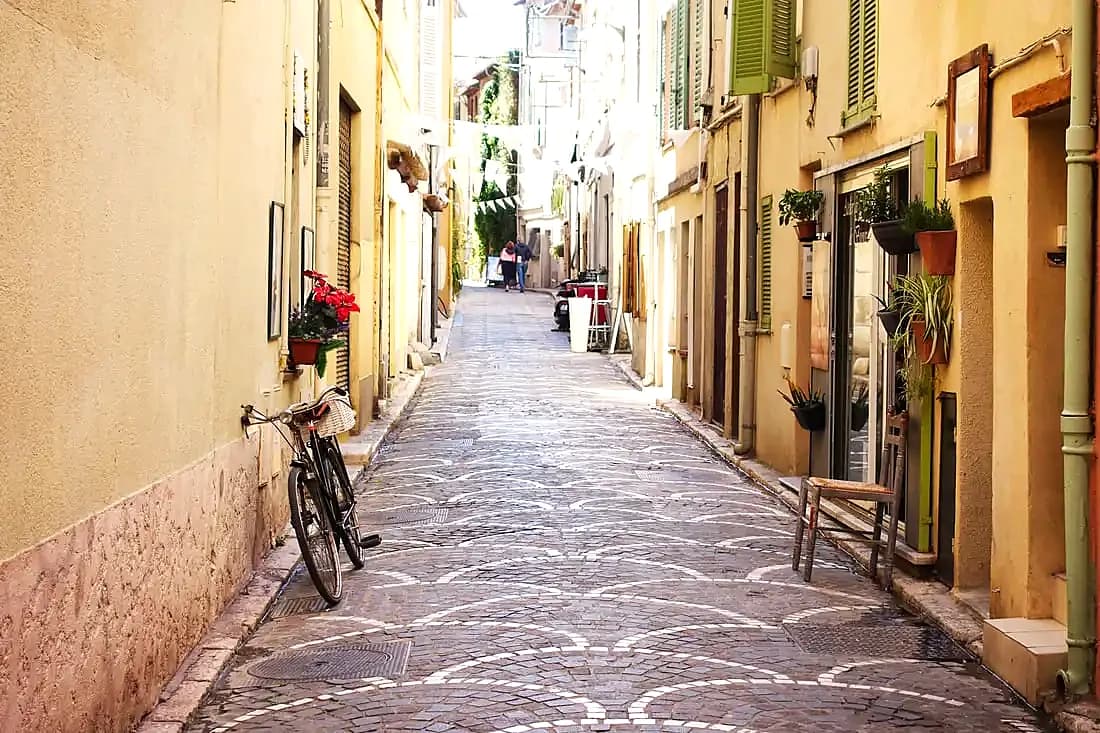
This is the part no route planner tells you. The old town is three hundred metres end to end, and its lanes were drawn for mules. Your driver will stop at the edge of the ramparts and you will walk the final hundred metres over cobbles — which is precisely why the old town still feels like a village rather than a thoroughfare.
We meet guests at the door, carry what needs carrying, and the key is waiting. Tell us your flight number and we will be there when you arrive, whatever the plane decides to do.
The seven housesEverything on this page is minutes from our doors.
Seven restored houses inside the old town — live availability, transparent prices, and your hosts two streets away.
More from the guide
View the full guide →