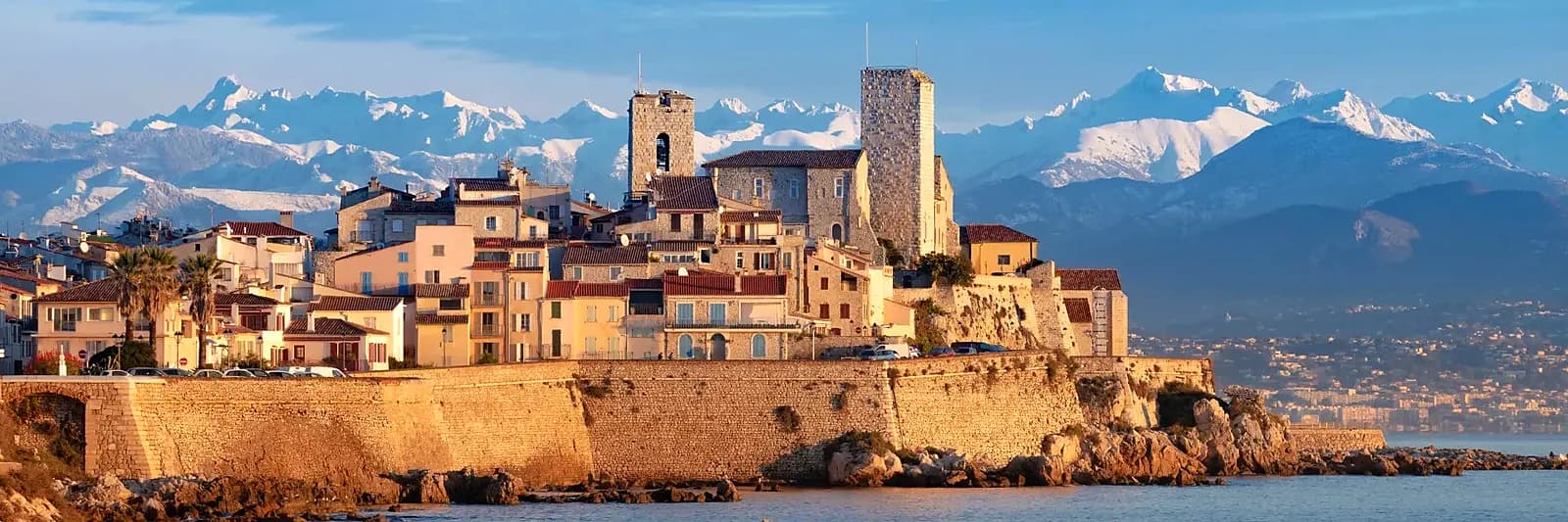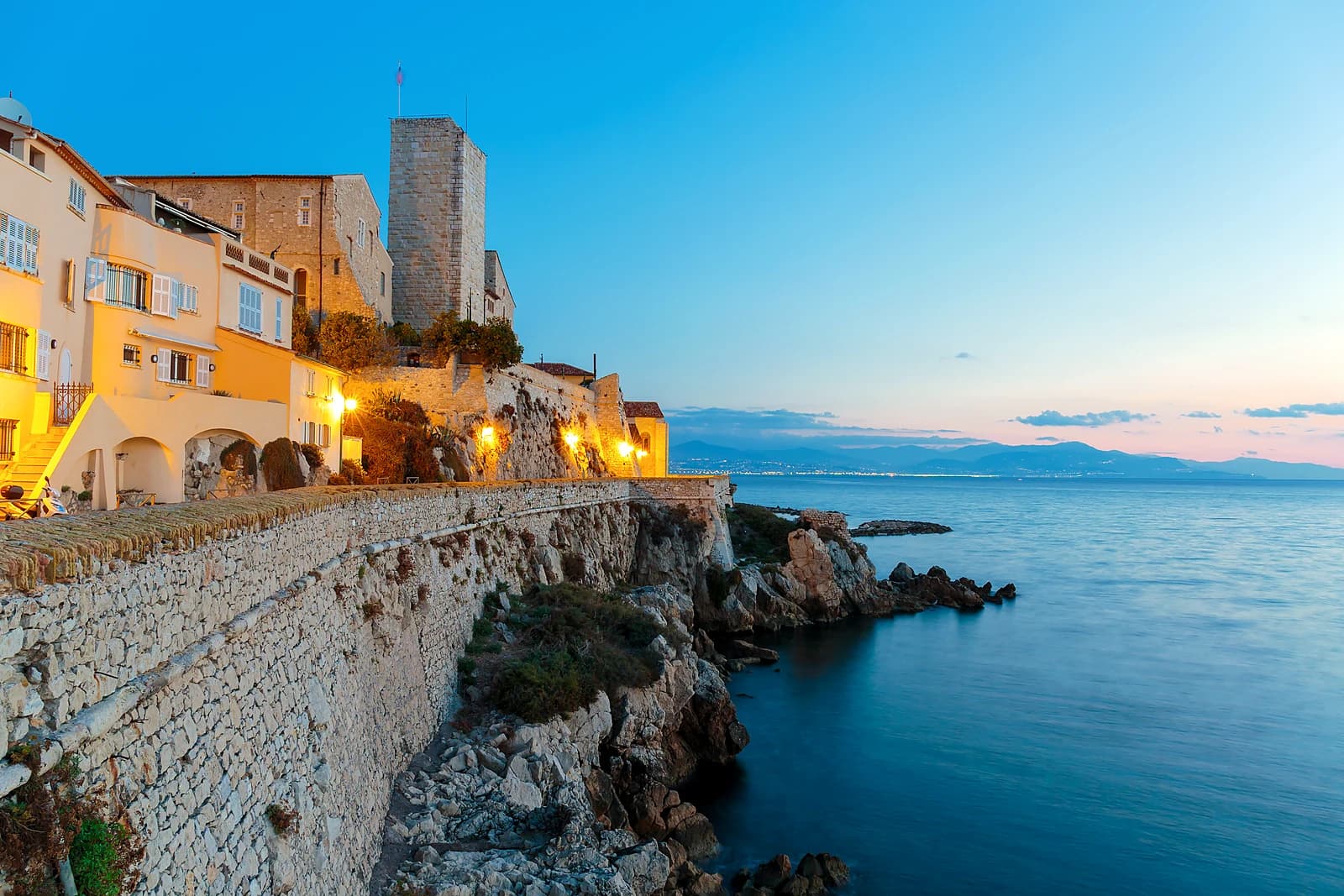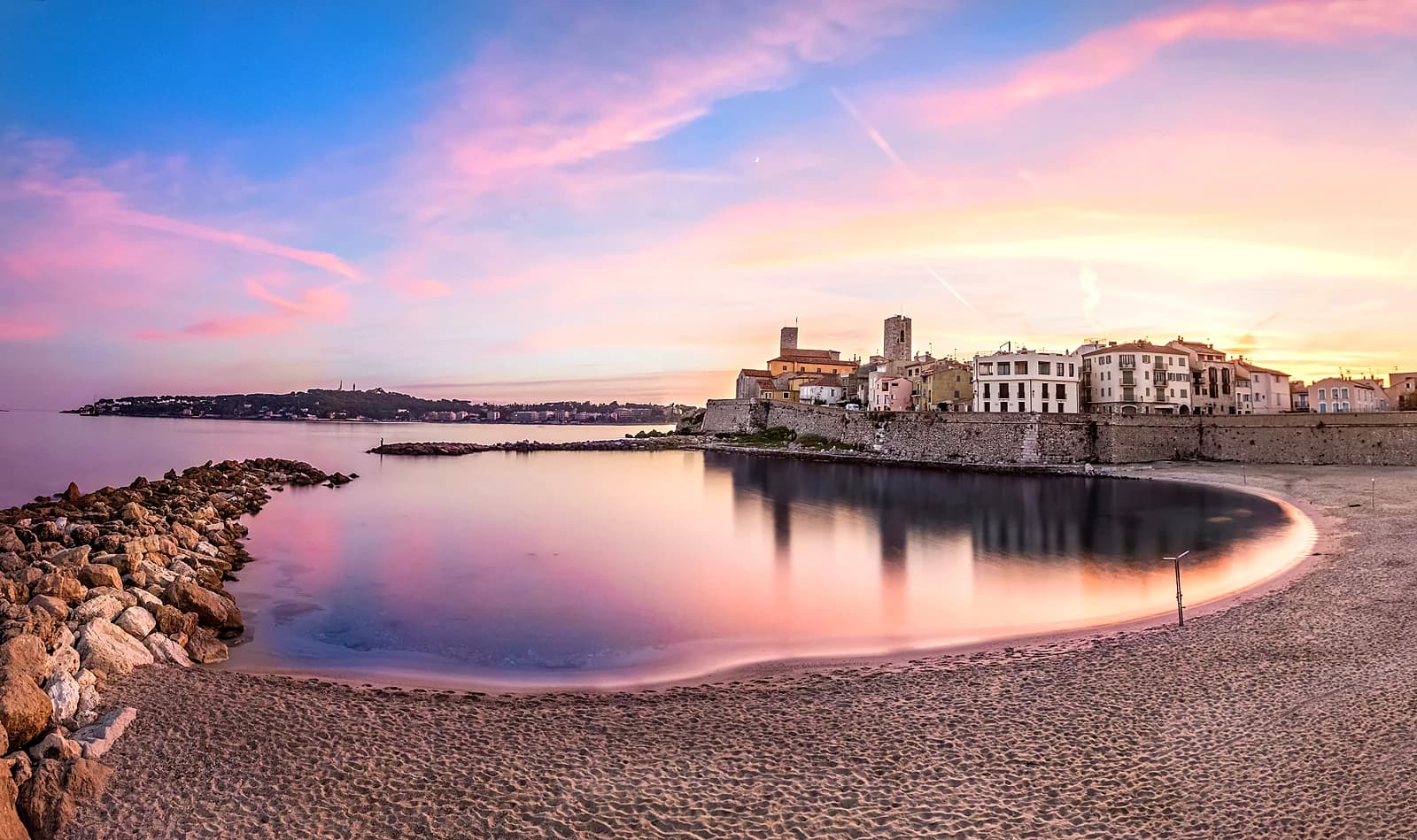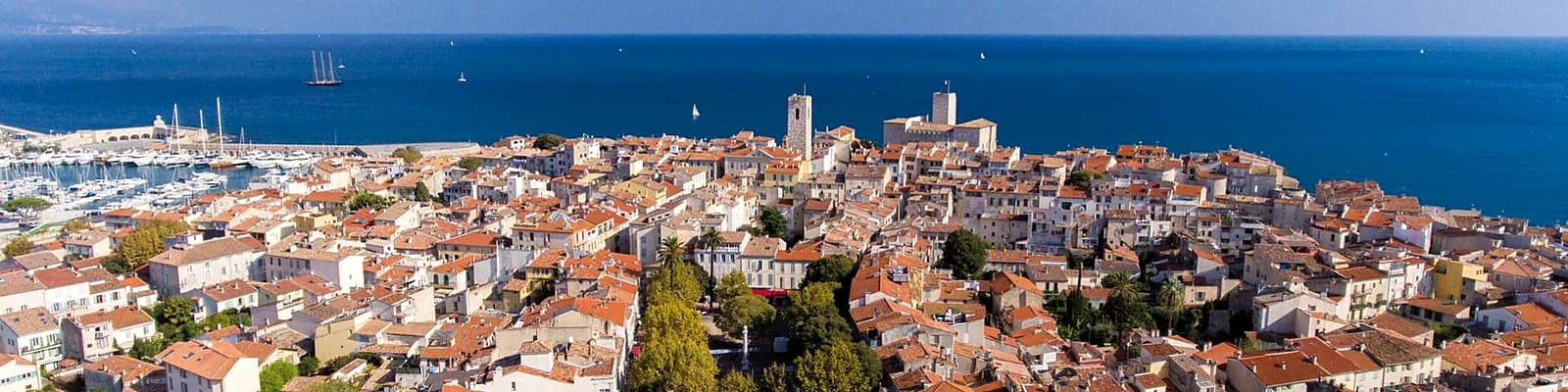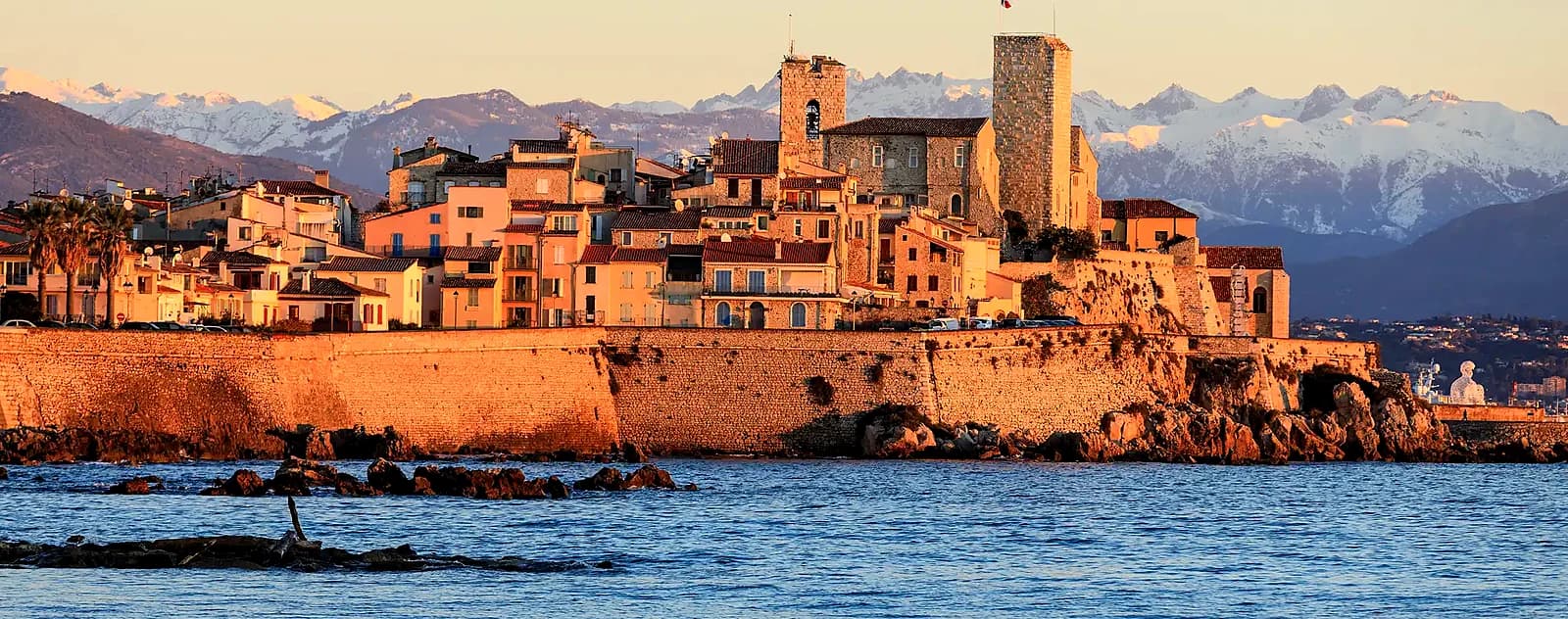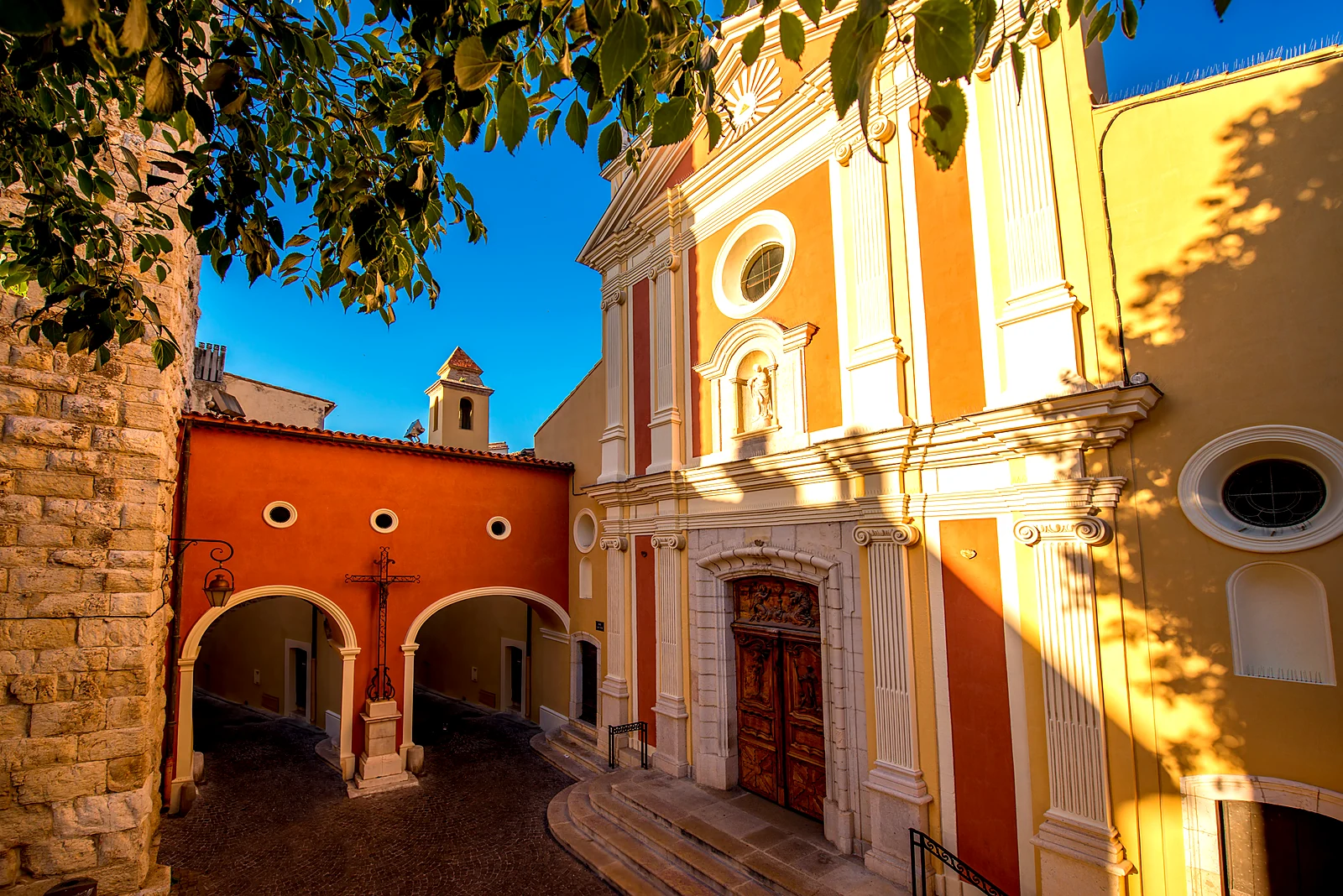
Squeezed between the Château Grimaldi and the sea, the cathedral of Notre-Dame de la Platea — officially Notre-Dame-de-l’Immaculée-Conception, the cathédrale d’Antibes to everyone in town — is the largest church in Antibes and stands on its oldest Christian site. A medieval watchtower for a bell tower, a Romanesque choir, an eighteenth-century façade in Mediterranean ochres, and inside, an altarpiece by Louis Bréa that the town is rightly proud of. It is free, it is a few minutes on foot from our houses in the old town, and it deserves more than the glance most people give it on the way to Picasso.
A cathedral without a bishop
Antibes was the seat of a bishop from 442 to 1244. The first, Saint Armentarius, a monk from the abbey of Lérins, had a church dedicated to the Virgin built here; excavations under the adjoining Chapelle du Saint-Esprit support the story. Local tradition, less cautious, puts a temple to Diana and Minerva beneath it.
Saracen raiders destroyed the building in 1124 and it was rebuilt the following year. In 1244 the bishops moved inland to Grasse, out of reach of the sea, and never came back. Antibes kept the title anyway, which is why a parish church with no bishop is still, and will always be, the cathedral.
In 1945 the whole group — the church, the Chapelle du Saint-Esprit and the Tour Grimaldi — was listed as a historic monument.
The tower, the choir and the façade
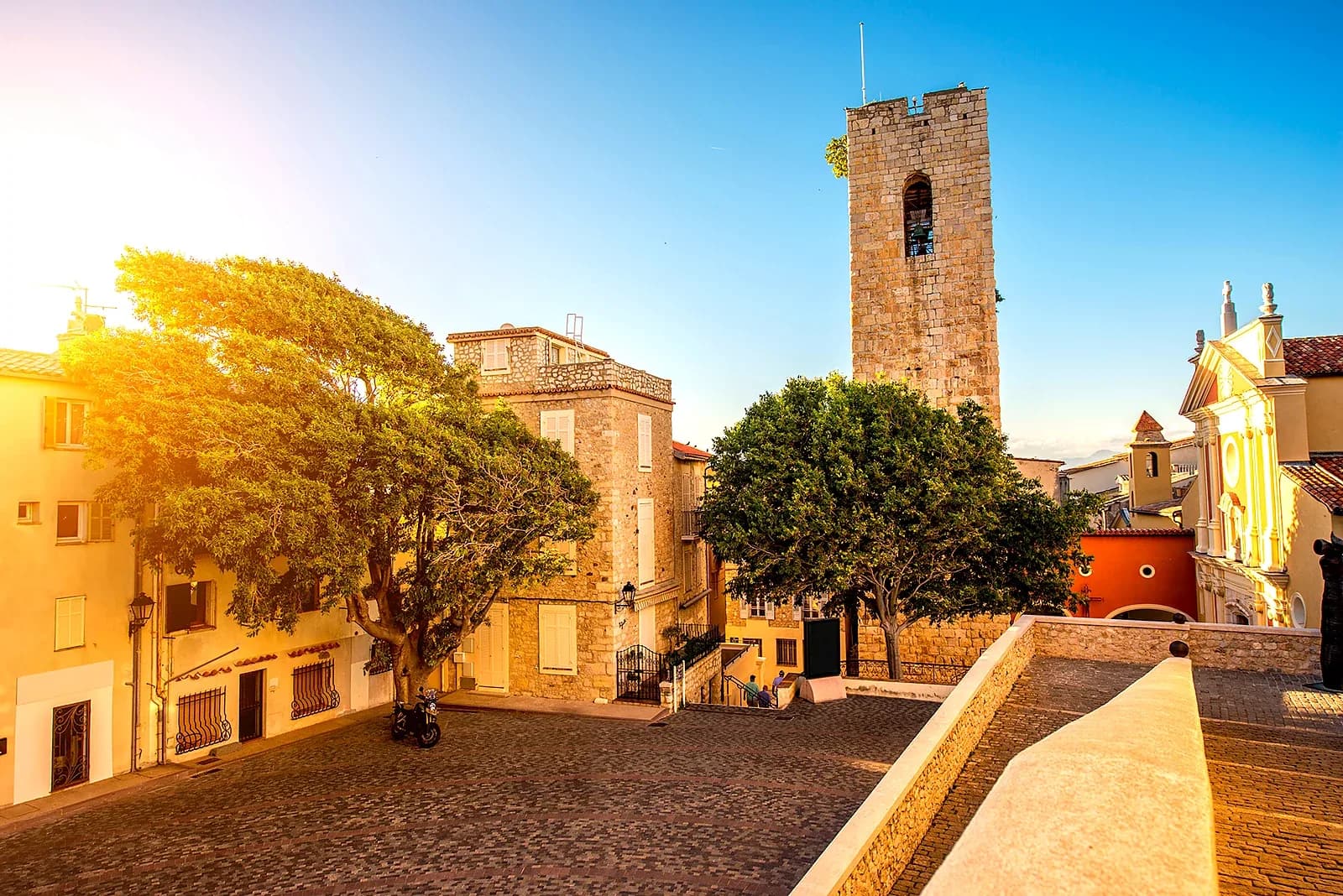
Start outside. The square stone bell tower across the lane is the Tour Grimaldi, about 30 metres high, built as a watchtower in the eleventh century, after the Saracens had been driven from the coast. It carries the Grimaldi name, though the family did not build it; it was simply theirs for a while, like most things round here.
The church itself is a palimpsest. The choir is Romanesque, from the twelfth century. The façade came much later: the town was bombarded in 1746 during the War of the Austrian Succession, the front was rebuilt with money from Louis XV, reworked again in the nineteenth century, and restored by the town in 2016. The ochre and white you see today is the result.
Before going in, look at the doors. Carved in walnut around 1710 by the Antibes sculptor Dolle, they show Saint Roch and Saint Sebastian, the town’s two patron saints — the plague saints, which tells you what a port town feared most.
Inside: the Rosary altarpiece
The church has three naves, and the reason to walk to the transept is the altarpiece of the Virgin of the Rosary by Louis Bréa, the Nice painter, dated to 1513 by the tourist office and 1515 by other sources. The Virgin spreads her cloak over the faithful, the Child offers them the rosary, and around the centre fifteen small scenes tell the Mysteries of the Rosary.
The tourist office describes it as the only complete Virgin of the Rosary of its kind to survive. Give it ten minutes, and go close: the small panels reward it.
Inside: the Christ, the font and the organ
The other piece people remember is the recumbent dead Christ, carved in polychrome lime wood. It was found in 1938, during works on a wall of the church, and is listed as a historic object. Sources disagree on its date, so we will not pretend to know it; the face does not need one.
Look also for the marble baptismal font of 1722 with its bronze lid, the side altars with their gilded wood, and, at the back, the large organ built in 1860 by the organ builder Jungh.
Visiting: hours, entry and what to wear
Entry is free. The church is open every day, but neither the tourist office nor the parish publishes fixed visiting hours, so if the door is shut, try again later in the day. During services, visits stop: come for the altarpiece, not for the 11 o’clock mass.
Half an hour is enough for a careful visit. The tourist office lists the cathedral as accessible to wheelchair users on their own; the lanes around it are pedestrian.
We know of no written dress code. It is a working parish church, though, and the beach is close: a shirt over the swimsuit and something on the shoulders is simple good manners, and nobody will look twice.
Mass times, and music
The cathedral is the main church of the Paroisse Saint-Armentaire. At the time of writing, the parish lists the following weekend masses here, including one in English on Saturday evening; weekday masses vary. Times change for feasts and holidays: check paroisse-antibes.fr before you plan around one.
In early autumn the cathedral is the main stage of the Festival d’Art Sacré, a series of sacred-music concerts; the 35th edition ran from 11 September to 4 October 2026, with tickets sold by the tourist office.
Around the square
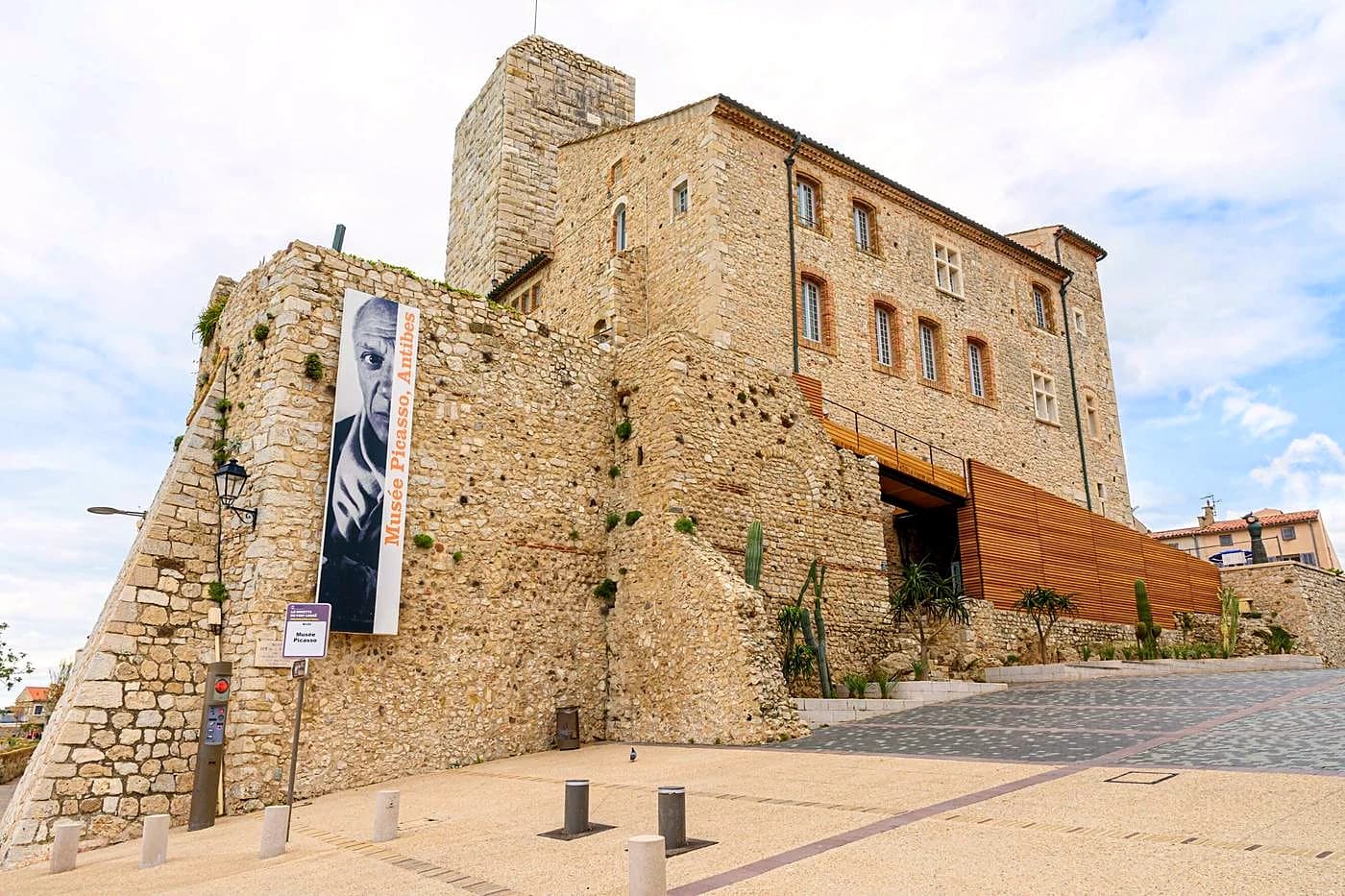
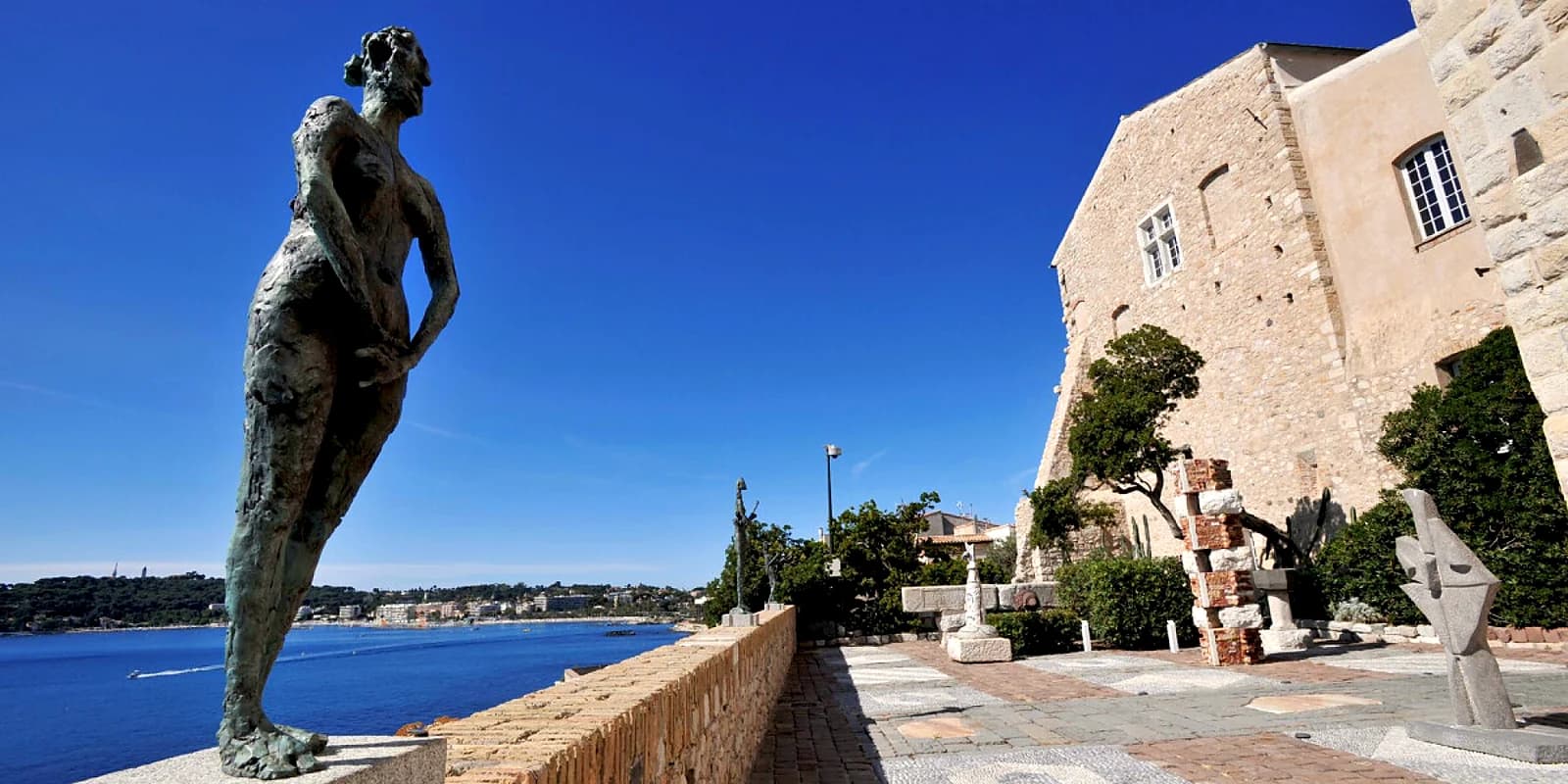
The cathedral, at 1 rue du Saint-Esprit, shares its rock with the Château Grimaldi, which has housed the Picasso Museum since 1966: the museum’s entrance on Place Mariéjol is a minute away. The museum is closed on Mondays; the cathedral is not, which makes it the Monday consolation prize.
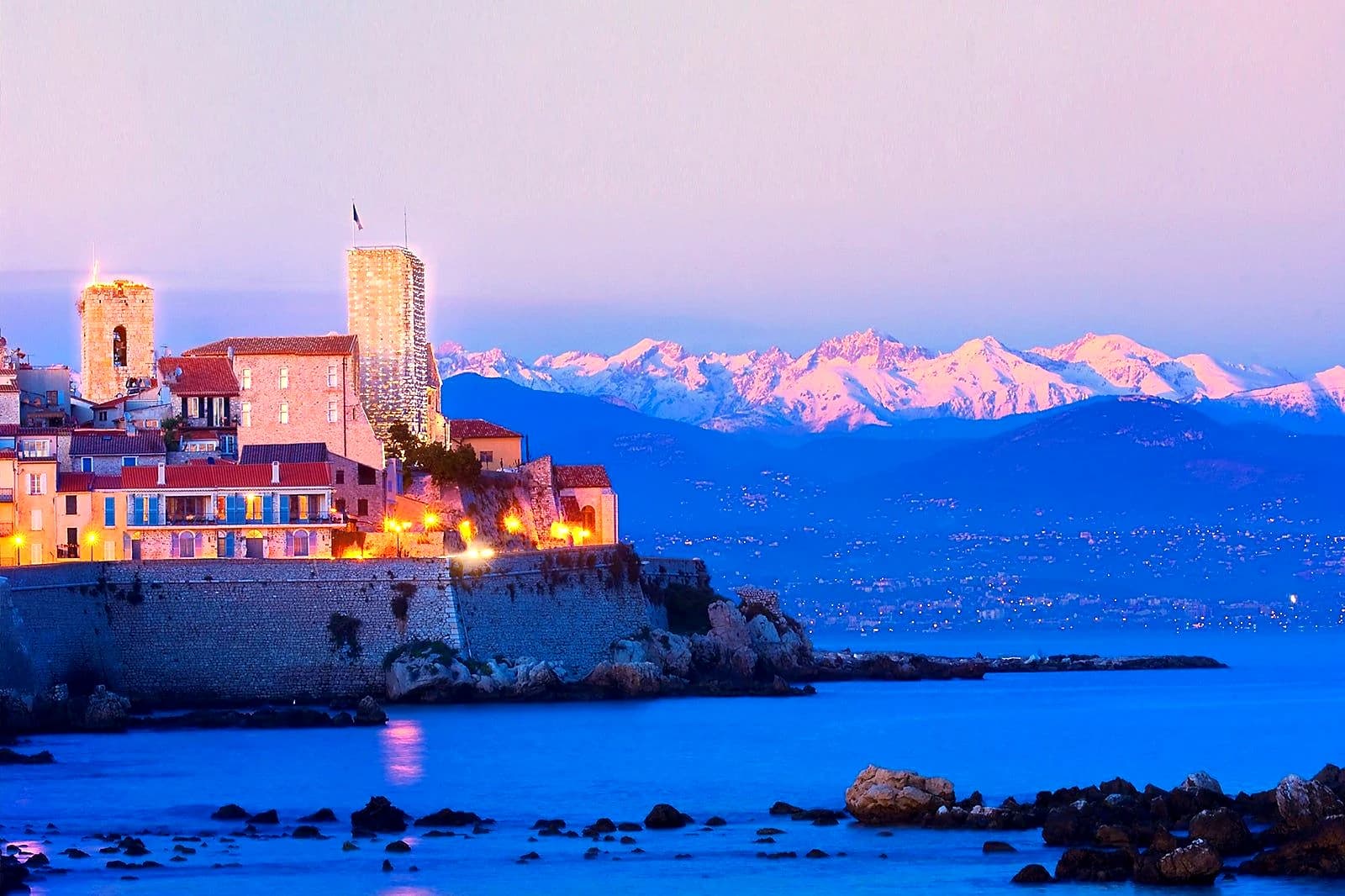
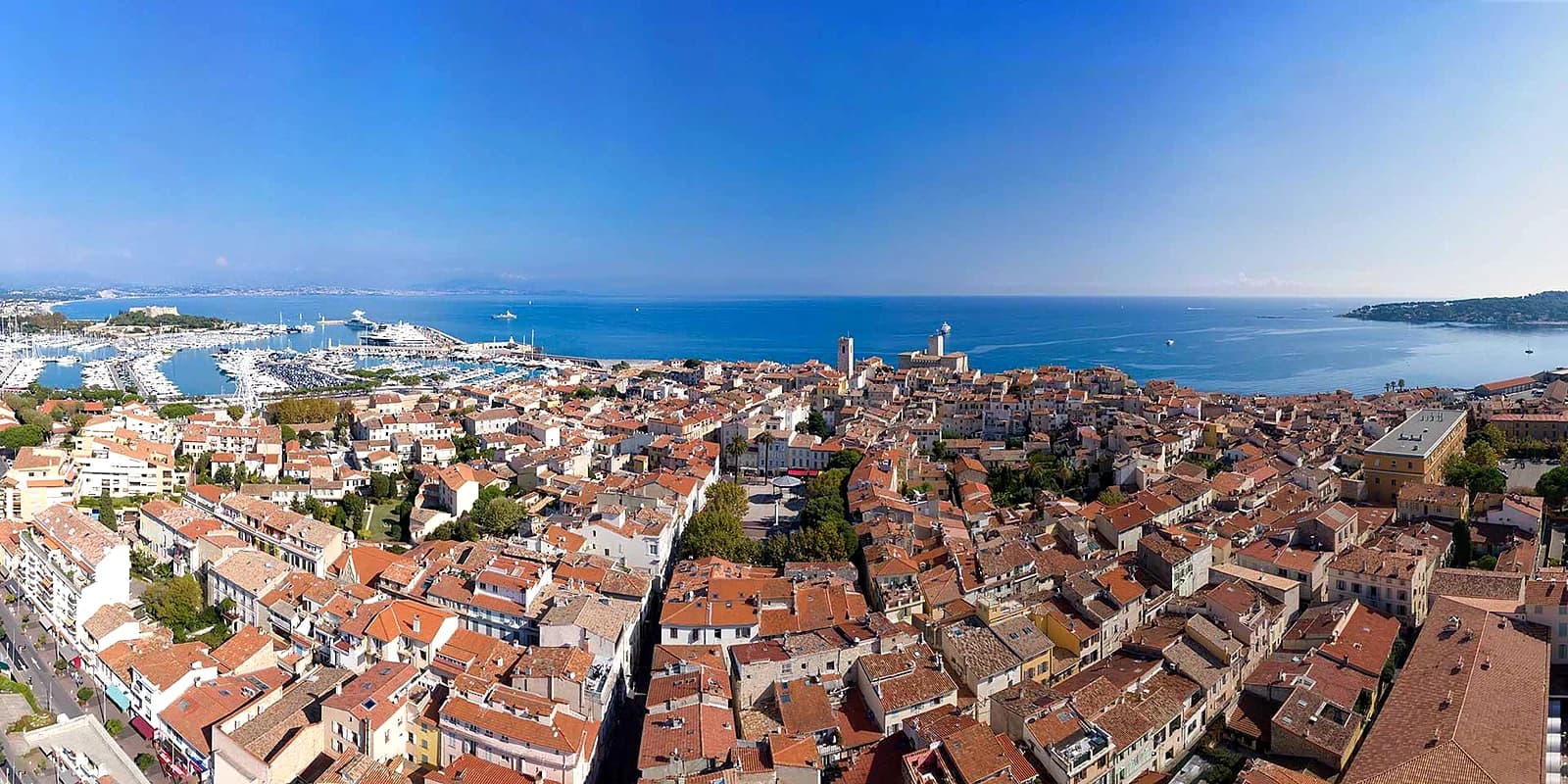
Below, a short walk down, the Marché Provençal fills Cours Masséna every morning except Monday out of season, and every morning in summer; and from the cathedral the Promenade Amiral de Grasse runs along the sea wall with the Baie des Anges and the Alps on the other side. Cathedral, museum, market, lunch: the oldest corner of Antibes fits in one morning.
The Picasso Museum next doorQuestions
Is Antibes Cathedral free to visit?
Yes. Entry to Antibes Cathedral, Notre-Dame de la Platea, is free, and it is open every day. Visits stop during services.
What are the opening hours of Antibes Cathedral?
The cathedral is open every day, but neither the tourist office nor the parish publishes fixed visiting hours. Avoid mass times, when visits stop.
What time is Sunday mass at Antibes Cathedral?
At the time of writing, the parish lists Sunday mass at the cathedral at 11:00 and 18:30, and a Saturday mass in English at 18:30. Check paroisse-antibes.fr for feast days and changes.
Why is Notre-Dame de la Platea called a cathedral?
Antibes was the seat of a bishop from 442 until 1244, when the see moved to Grasse. The church kept the title of cathedral, though it has had no bishop since.
Is Antibes Cathedral next to the Picasso Museum?
Yes. The cathedral stands beside the Château Grimaldi, home of the Picasso Museum, about a minute’s walk apart in the oldest part of the old town. The Provençal market on Cours Masséna is just below.
Everything on this page is minutes from our doors.
Seven restored houses inside the old town — live availability, transparent prices, and your hosts two streets away.
More from the guide
View the full guide →