The art of restoration
Every house in the collection is centuries old. Our work is not to make them look new — it is to make them live again, without asking the stone to apologise for its age.
Our first decision in a house is always the same one, and it is a decision about what NOT to do: expose, don't cover. A wall of four-hundred-year-old stone does not need wallpaper, and a beam that has held a roof since 1680 does not need a box around it.
Everything else follows from there — what we restore rather than replace, what we allow ourselves to add, and how quietly we add it. Three rules, one house at a time.
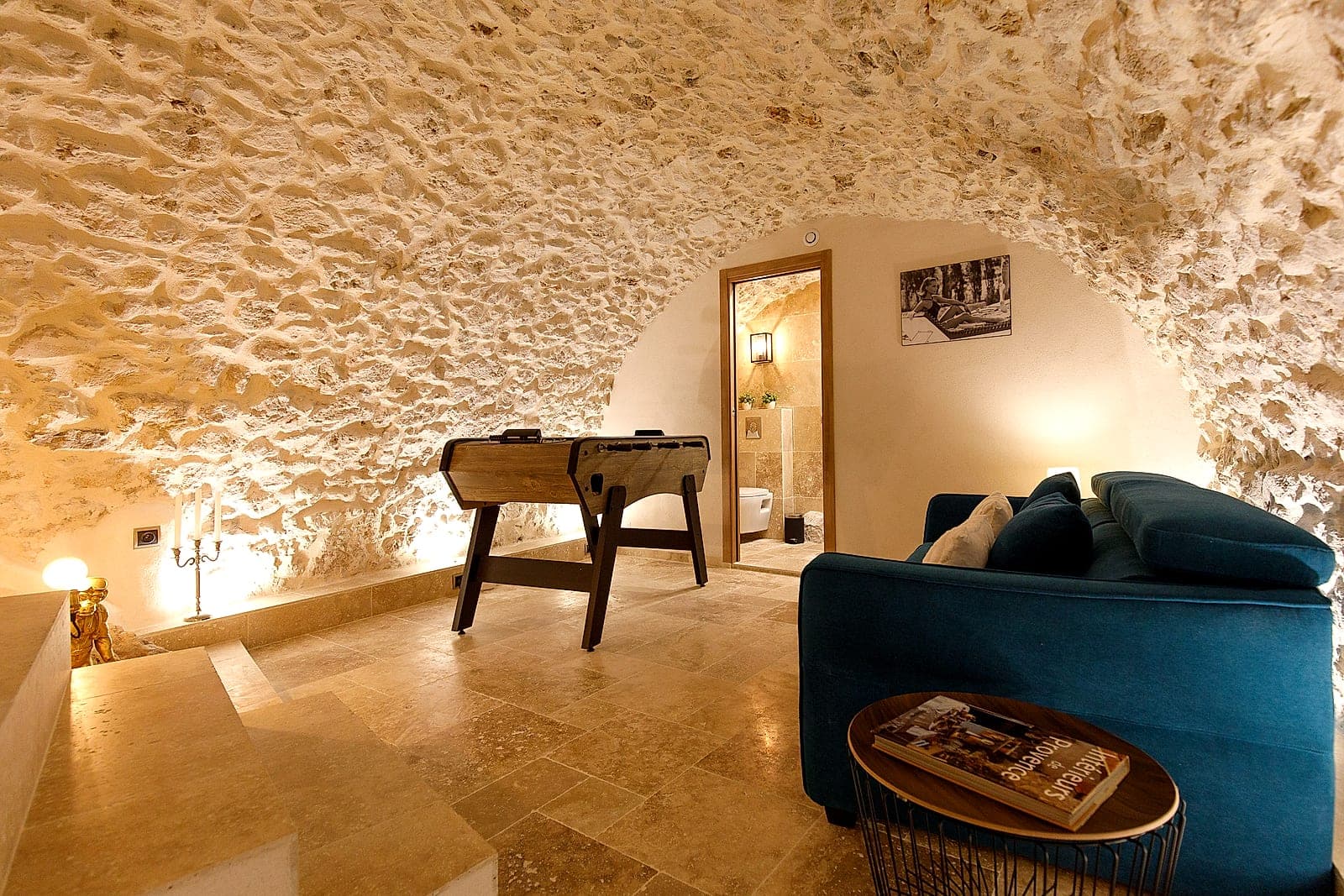
Four hundred years old
Sea stone, lime and chestnut beams — what the place gave, when these houses were built inside the walls of old Antibes in the seventeenth century.
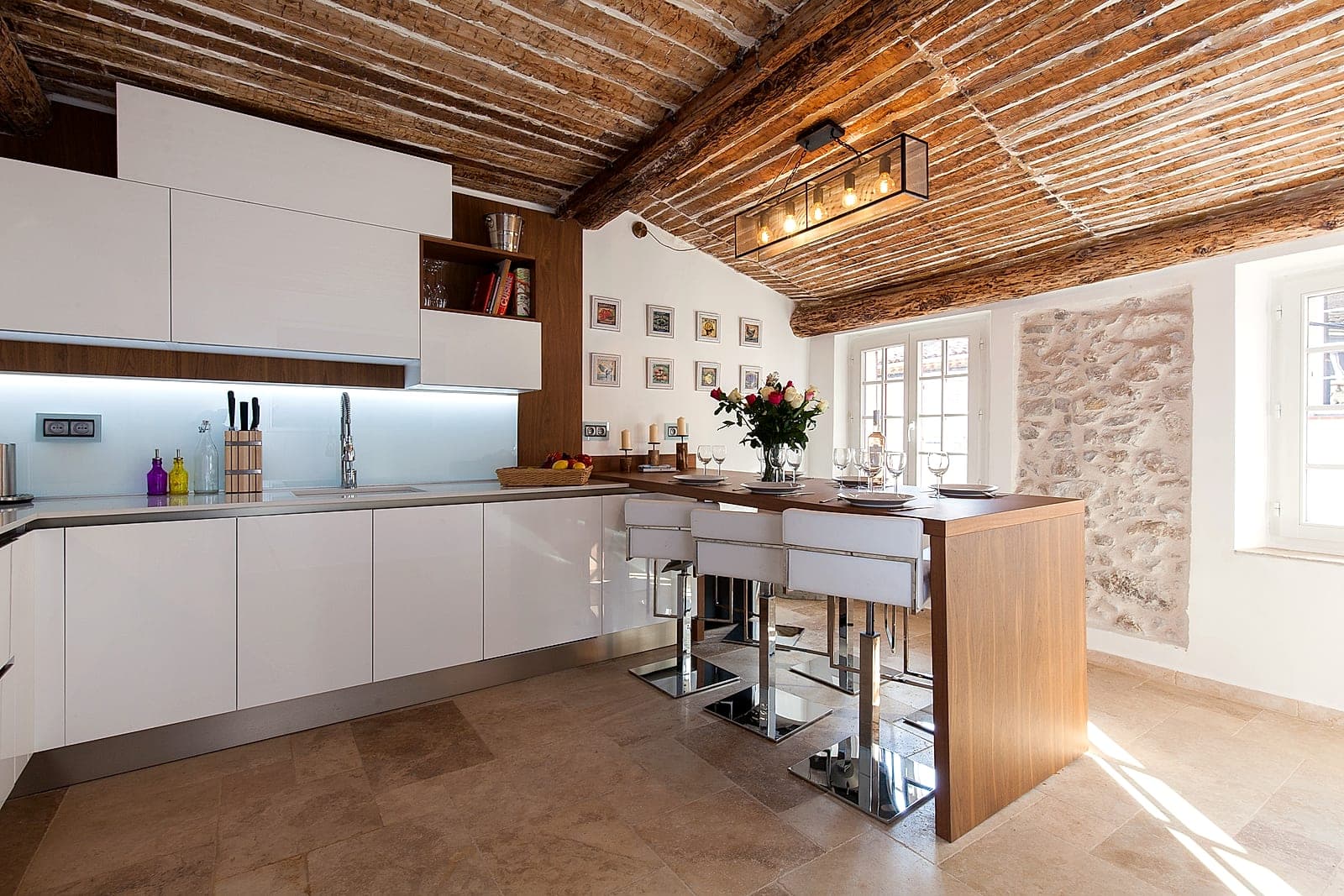
What the walls remember
Inside the walls of old Antibes, houses were built in the seventeenth century with what the place gave: sea stone, lime, chestnut beams. When we open a house, our first decision is always the same — expose, don't cover. A wall of four-hundred-year-old stone does not need wallpaper.
So the beams stay overhead, the stone stays bare where it is at its best, and the rooms keep the irregular, hand-made geometry that no new build can imitate. There is no lift, as tradition dictates in the old town — the stairs are part of the story.
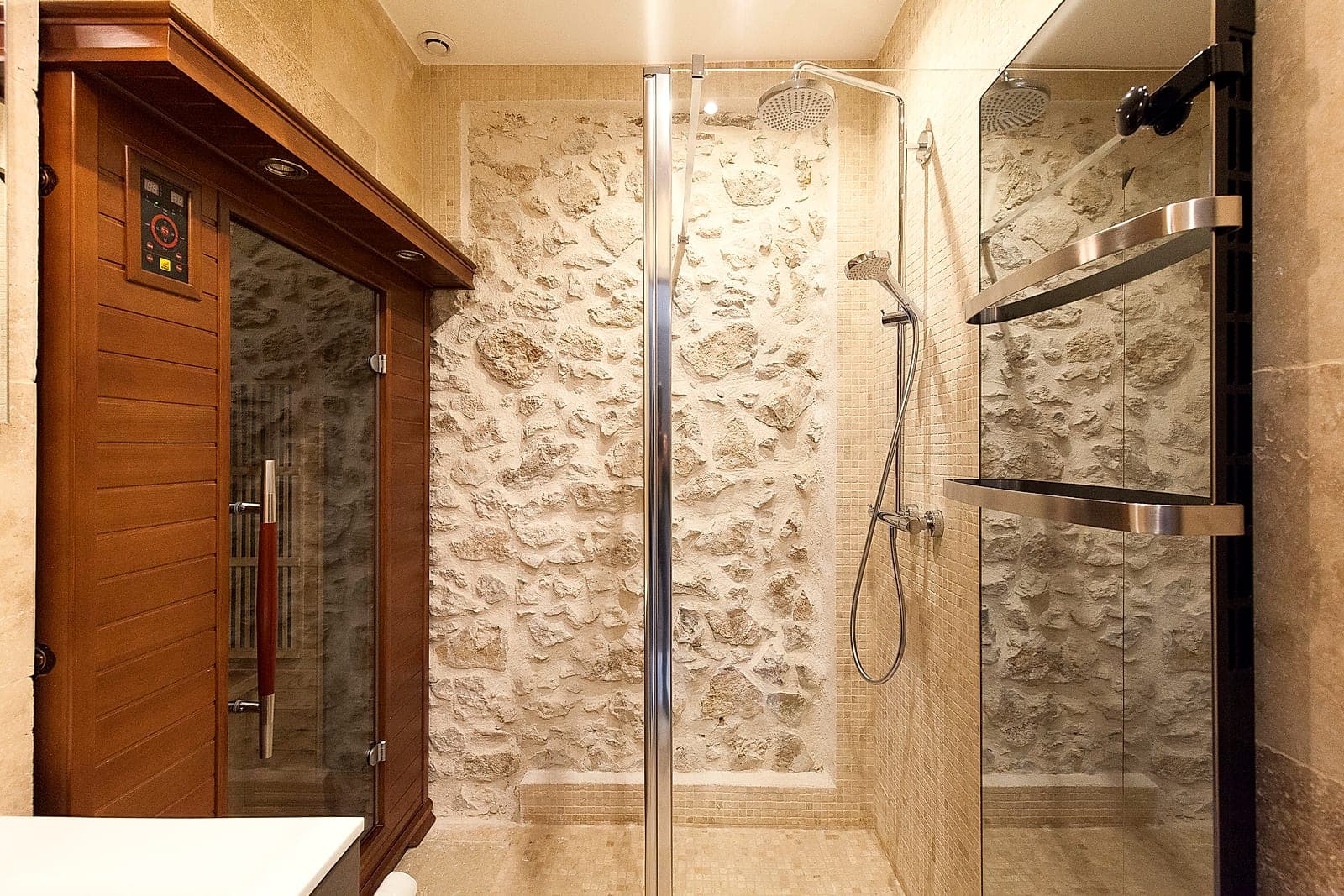
The materials we keep
Original travertine floors are restored, not replaced. At Maison Regina, a marble staircase climbs through three levels of stone to a rooftop over the whole bay — it decided the purchase on its own. Showers are cut into old walls; baths sit against exposed stonework; a wooden door four generations old still closes on a brand-new bathroom.
When something must be new, we choose materials that will age the way the house does: granite, teak, brass, lime plaster. Nothing that pretends, nothing that peels.
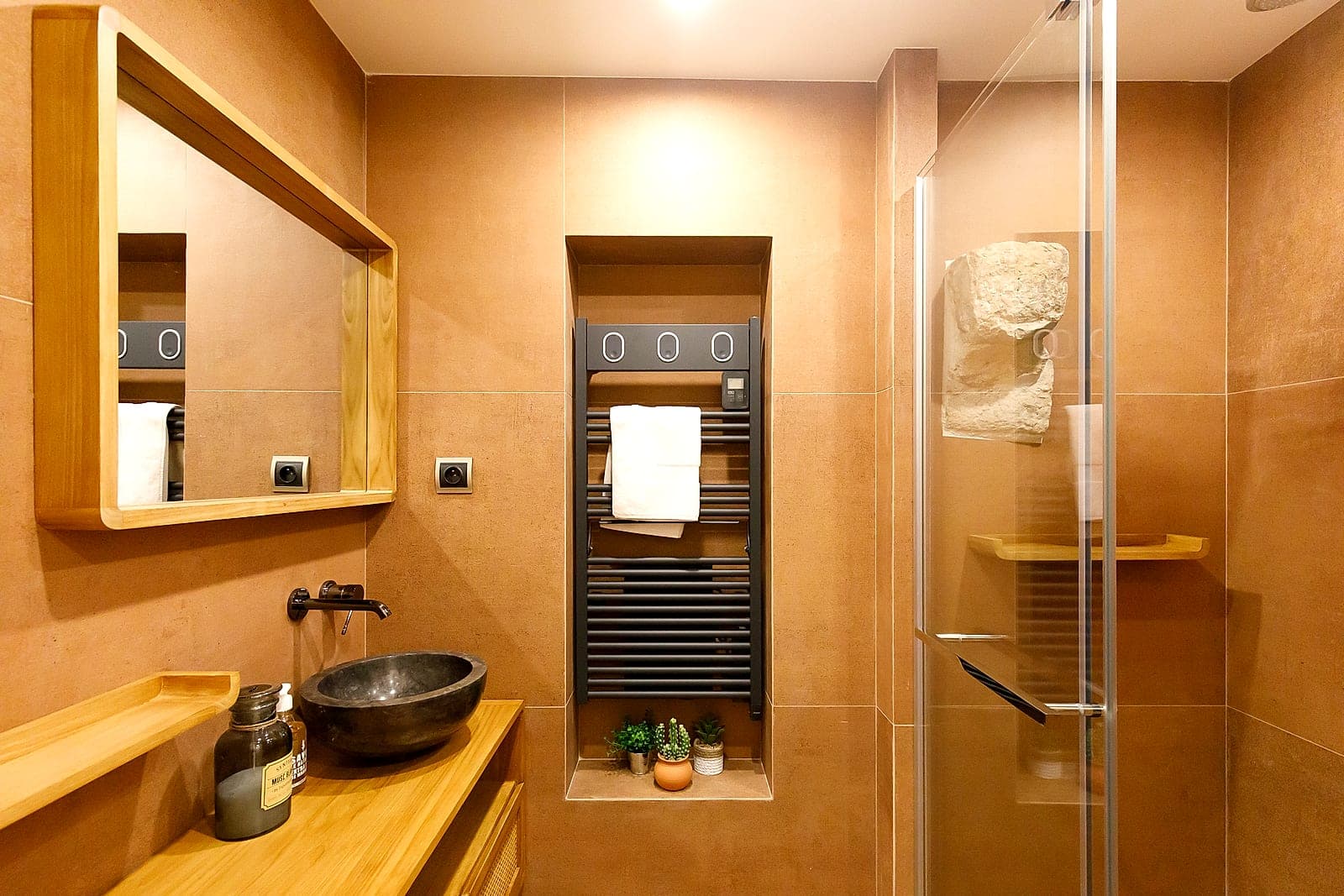
“We never restore a house to look new. We restore it to look like itself — with the lights on and the water hot.”